John Hammond: “None of these attractions are ready yet, of course, but the park will open with the basic tour that you’re about to take, and then other rides will come online six to twelve months after that. Absolutely spectacular designs. Spared no expense.”
Donald Gennaro: “And we can charge anything we want. Two thousand a day, ten thousand a day, and people will pay it. And then there’s the merchandising which I personally…”
John Hammond: “Donald, Donald. This park was not built to care only for the super-rich. Everyone in the world has the right to enjoy these animals.”
Donald Gennaro: “Sure. They will. I mean, we’ll have a coupon day or something.”
Ian Malcolm: “Gee, the lack of humility before nature that’s being displayed here, uh, staggers me.”
Donald Gennaro: “Thank you, Dr. Malcolm, but I think things are a little bit different than both you and I have feared.”
Ian Malcolm: “Yeah, I know. They’re, uh, a lot worse.”
Donald Gennaro: “Now, wait a second now. We haven’t even seen the park yet. There’s no reason…”
John Hammond: “Donald, Donald, let him talk. There’s no reason… I want to hear every viewpoint. I really do.”
Ian Malcolm: “Yeah, uh, don’t you see the danger, John, uh, inherent in what you’re doing here? Genetic power’s the most awesome force this planet’s ever seen, but you wield it like a kid who’s found his dad’s gun.”
Donald Gennaro: “It’s hardly appropriate to start hurling accusations…”
Ian Malcolm: “If I may, if I may. Uh, I’ll tell you the problem with the scientific power that you’re, that you’re using here. It didn’t require any discipline to attain it. You know, you read what others had done, and you, and you took the next step. You didn’t earn the knowledge for yourselves, so you don’t take any responsibility… for it. You stand on the shoulders of geniuses, uh, to accomplish something as fast as you could, and before you even knew it, you had, you’ve patented it, and packaged it, and slapped it on a plastic lunch box, and now you’re selling it, you wanna sell it, well.”
John Hammond: “I don’t think you’re giving us our due credit. Our scientists have done things which nobody has ever done before.”
Ian Malcolm: “Yeah, yeah, but your scientists were so preoccupied over whether or not they could, they didn’t stop to think if they should.”
John Hammond: “Condors. Condors are on the verge of extinction.”
Ian Malcolm: “No,…”
John Hammond: “No, no! If I was to create a flock of condors on this island, you wouldn’t have anything to say.”
Ian Malcolm: “No, no, listen, this isn’t some species that was obliterated by deforestation or, uh, the building of a dam. Dinosaurs, uh, had their shot, and nature selected them for extinction.”
John Hammond: “I simply don’t understand this kind of Luddite attitude, especially from a scientist! I mean, how can we stand in the light of discovery and not act?”
Ian Malcolm: “Oh, what’s so great about discovery? It’s a violent, penetrative act that scars what it explores. What you call discovery, I call the rape of the natural world.”
Ellie Sattler: “Well, the question is, how can you know anything about an extinct ecosystem? And therefore, how could you ever assume that you can control it? You have plants in this building that are poisonous. You picked them because they look good. But these are aggressive living things that have no idea what century they’re in and they will defend themselves. Violently, if necessary.”
John Hammond: “Dr. Grant, if there’s one person here who can appreciate what I’m trying to do…”
Alan Grant: “The world has just changed so radically, and we’re all running to catch up. I don’t want to jump to any conclusions but look: dinosaurs and man, two species separated by sixty-five million years of evolution, have just been suddenly thrown back into the mix together. How can we possibly have the slightest idea what to expect?”
John Hammond: “I don’t believe it! I don’t believe it! You’re meant to come down here and defend me against these characters and the only one I’ve got on my side is the blood-sucking lawyer!”
Donald Gennaro: “Thank you.”
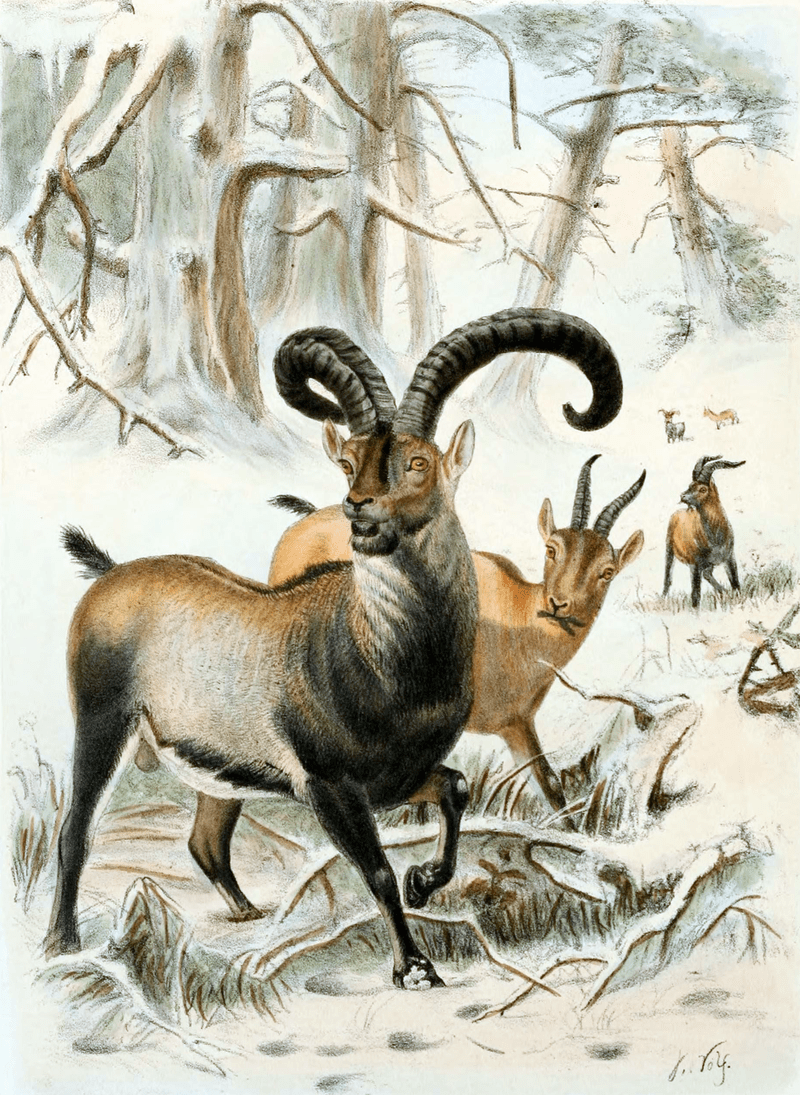
Hopefully you recognized that as a portion from the script of the 1993 Steven Spielberg movie Jurassic Park, based on a 1990 Michael Crichton book of the same name. This scene explores the themes that this article will explore today, themes that have proven prescient since the movie’s release. Welcome to Jurassic Park.
I don’t think it’s particularly surprising for followers of this blog that I am interested in the topic of extinction, as I’ve already written on the extinction of the thylacine, the death of the North American Pleistocene megafauna, and extraterrestrial impactors including a long treatment of the K-Pg impact event. But recent developments in the niche field of de-extinction, taking organisms which have gone extinct and attempting to undo that in some way, has come back into the fore. Projects like these have been going on for about a hundred years. Attempts have been made. A few have arguably succeeded and a few have probably not. However, each time it makes the news cycle, it feels like public amnesia takes hold and the concept is presented as novel again, usually in the interest of promoting a promised world-changing project. This is my attempt to address that lack of a proper historical article on the matter. We are going to go through the whole story of de-extinction from its beginnings to today. Whatever you came here expecting, I am sure you will find something to be surprised about, something to find incredible, and something to be deeply disturbed about.
At its core this is a story about biology. It is a story about what constitutes good science and what doesn’t. It is a story about the ethics of science. It is a story about media and entertainment. It is a story about the human condition and the anxieties of our existence. It is a story about politics and conservation and climate change and genocide and hope. No matter how sterilized the technical discussions of scientific procedures become, and we will discuss those procedures, the actual story of de-extinction and its place in our world is one that needs to be given the context of history to be chewed properly.
We open with the First World War.
Two Brothers and Two World Wars

World War I produced extensive aerial landscape photography that was used for reconnaissance in military operations, preserving our knowledge of how the war affected landscapes. This photo is from the Battle of the Somme in northern France, which lasted for more than 4 months in 1916 and involved more than 3 million soldiers over its course. Photography by the No. 10 Squadron of the British Royal Flying Corps, which became the Royal Air Force after the war. A portion of the British trenches are shown in the upper picture and the German trenches in the lower.
On June 28, 1914, a Serbian nationalist by the name of Gavrilo Princip fired a shot in the streets of Belgrade, a city in the Austro-Hungarian Empire (and today in Bosnia and Herzegovina), that killed Archduke Franz Ferdinand. Austria-Hungary threatened annexation of what remained of independent Serbia, which called on the Russian Empire for defense. As Russia loomed against Austria-Hungary, the German Empire declared itself in support of the latter, to which France and Britain took notice and issue. A diplomatic crisis spiraled out of control and soon Europe was at war in what we remember as World War I, lasting from 1914 to 1918, eventually drawing in outside powers like Japan and the United States and being waged on many continents. The human death toll of World War I was immense and varies depending on what you count as part of the war. The war killed around 15 to 22 million people, but the general period of history was even bloodier as it led directly into other conflicts such as the Russian Civil War of 1917 to 1922 which killed around 7 to 12 million people and it overlapped with the 1918 to 1920 global influenza pandemic which killed between 25 and 50 million people. These other things aside, part of what made World War I particularly brutal was the innovations made in carrying out industrialized warfare. Innovations in aviation meant the beginnings of aerial bombing campaigns while bigger artillery could lay hell on enemy troops from kilometers away and gas attacks poisoned air and burned the skin and lungs of enemies in terrible and disfiguring ways. The most enduring image of World War I for many people is the trenches, which cut across hundreds of kilometers of especially Europe, fortifying entire landscapes in long stalemated face-offs where soldiers lived and died in squalid pits and the terrible torn-apart no-man’s land that lay between them.
The human impact of the war should not be understated but another side of the conflict that many people today don’t think about is its ecological impact. World War I was incredibly impactful on resource use, land use, and pollution. As vast regions of countryside became battlefields for extended periods of time, local ecosystems were pounded into mud and chemical weapons laid destructive compounds into air and water that had far more victims than only human soldiers. Copper and lead contamination in soil and water spiked to the point where at many times plants could not grow in areas where they grew lushly previously and unexploded mines and other ordinances lay in wait to turn unsuspecting animals into red mist. In northeastern France for example, a large area was designated as Zone Rouge, the red zone, where the land was considered for a time unlivable and crops would not grow, with some towns never coming back after the war. On top of this was the demand for wood, which remained a key necessity in waging war, even in the technological age. Every new trench or every adjustment or repair was essentially a construction job as wooden elements were required to give structure to the interior of the defenses. So even far from the battle lines, combating nations had to cut vast areas of forest fast for delivery to the front. It was this that had a long-term environmental impact on Europe more than the chemical pollution and mines. Weaponized chemicals would eventually be carried away and sequestered by natural processes after the armistice was signed on November 11, 1918 but the ecology of large-scale ecosystems is a little harder to heal in the same way. As Europe’s forests grew back in, formerly diverse environments were often left to a few hardy tree species that colonized them quickly, often not carrying along animal populations that had previously thrived there.
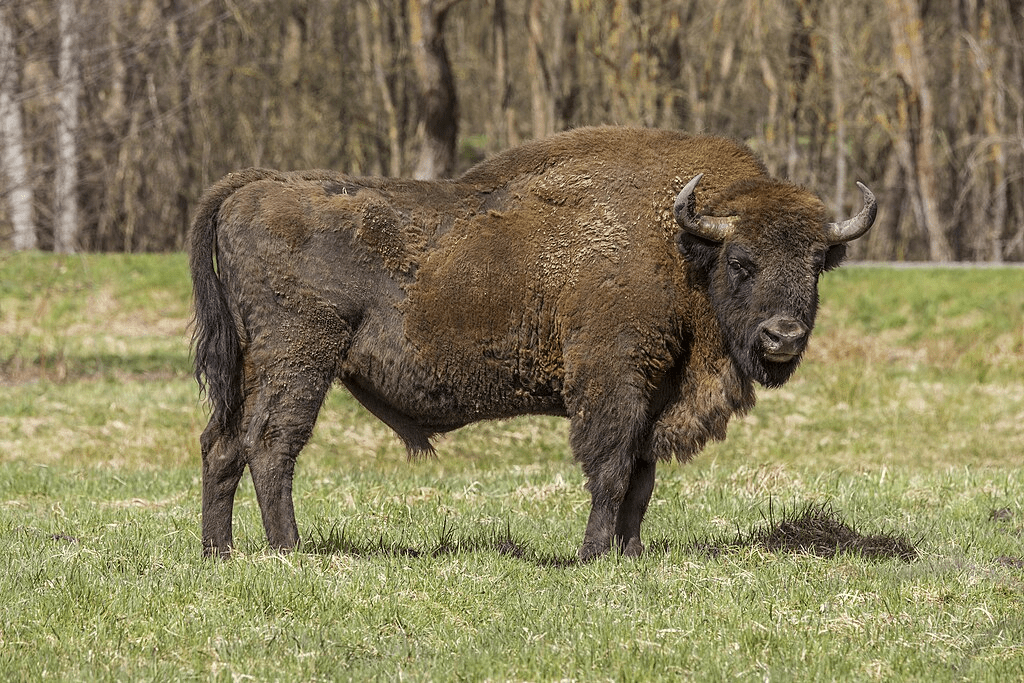
This is a wisent or European bison (Bison bonasus) in the Białowieża Forest in Poland in a picture by wildlife photographer Charles J. Sharp.
The wisent is the European bison (Bison bonasus), part of the same genus as the American bison (Bison bison) that is a little more famous. Today they are the heaviest native land animals of Europe and were once common in the Pleistocene (probably spreading to Europe around 100,000 years ago from the steppes to the east), depicted in cave paintings by the prehistoric people who lived there. The last few thousand years have been hard on them as civilization encroached on their habitat and they became a rare prestige animal to hunt for use in the making of fine clothes and drinking horns and as the centerpiece of a feast. They were already an endangered species when World War I happened but during the war their habitat was destroyed and German soldiers hunted many of the last ones in a region of what is now Poland. In 1927, the last wild one was shot in the Caucasus, leaving 48 alive in the world’s zoos. This issue became of interest to a pair of German brothers by the names of Heinz and Lutz Heck. The Heck brothers were the son of the director of the Berlin Zoo and had grown up surrounded by animal breeding, starting with rabbits when they were very young. Their father had made use of the German Empire’s colonial holdings in Africa and elsewhere (all lost in the Treaty of Versailles at the end of the war) to bring in new animals as specimens to one of the world’s foremost research zoos. Naturally, the two boys made their way into science as adults quite nicely. Conservation as a movement had been growing in popularity in recent decades and in the case of the American bison (many of which were destroyed in the 1800s purposefully by US settlers to try to harm Native Americans who relied on them by proxy), efforts to protect them starting in 1905 had seen some success, inspiring conservationists in Germany to start thinking about doing the same for the far more critically endangered wisent. Heinz Heck laid the groundwork for a breeding program by beginning to take notes on every living wisent in captivity in 1923, which would become a published work in 1932, the first work of its kind for a non-domesticated species. Using this book, zoos could coordinate wisent breeding, which helped to increase the numbers of the animals. Thanks to him and others who worked with him, the wisent is not extinct today. Lutz Heck thought about fortifying the wisent breeding pool through crossbreeding with the American bison as well. Heinz recognized what scientists today still believe: the decline of the wisent, like that of many other species, related to it being hunted and pushed out of its habitat for thousands of years and it began in prehistoric times and was seeing its apex in industrial civilization. It would be nice to say that the brothers’ efforts led to wild wisent populations in their lifetimes but the reality was that another war was about to strike the European biosphere and that the wisents that roam wild in Europe today actually result from the continuation of the captive programs after said war. And one of these brothers would play a small but tangible role in the unfortunate social atmosphere that led to this war.
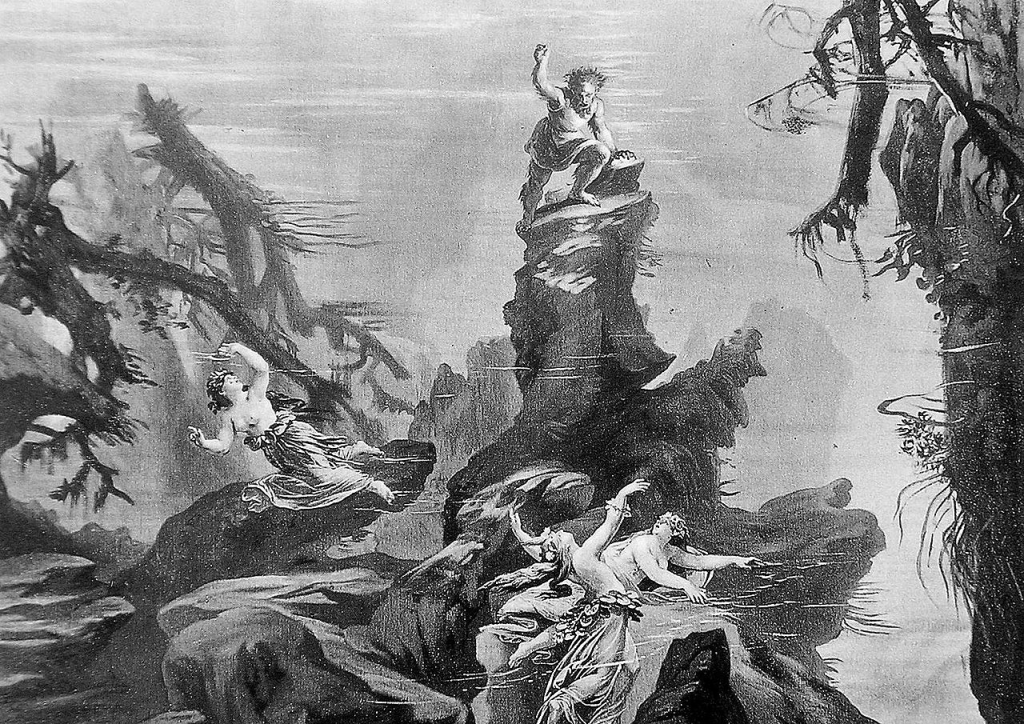
This set concept, photographed by Austrian photographer Viktor Angerer, was developed for the 1876 showing of Das Rheingold, the first of four operas in Richard Wagner’s epic cycle Der Ring des Nibelungen, which presented a series of adapted Norse myths in epic Romantic fashion. Wagner was not a Nazi by any means and died in 1883 long before he could get mixed up with that bag of shit, but his impact on how Germans romanticized their past was immense and informed a lot of later Nazi völkisch fantasy. Hitler was a particularly big fan of Wagner and sometimes forced the Reich’s higher-ups to attend showings, which they did not all appreciate.
The National Socialist German Workers’ Party, or Nazi Party for short, was founded in 1920, just two years after the end of World War I. Despite the socialist moniker, its constituents were extremely far to the political right and the party would spend its early history shifting from being anti-capitalist towards courting the interests of business. From 1921 onwards, the party fell under the leadership of one Adolf Hitler, a veteran of the Great War who considered the Treaty of Versailles deeply unfair and insulting to the German people and blamed a supposed international cabal of Jews and communists for conspiring against a German “Aryan” master race. At the time, German nationalism increasingly appealed to “völkisch” (in English, something like “folkish”) narratives which appealed to an idealized German past. Romantic adaptations of old Norse myths and pseudoarchaeology were used to imagine an age of heroes when ethnically “pure” Germanic Aryan figures laid the foundations for civilization in a pristine landscape, free of all those that German-supremacists considered undesirable, groups which included Jews, Romani, Slavs, the disabled, homosexuals, and black people. Such a world never truly existed but in the early 1900s it was nevertheless impacted by current understandings in archaeology, linguistics, and human origins and ideas from those areas of inquiry were twisted to fit the völkisch vision. Hitler and the Nazis excitedly embraced this storytelling and promoted them as patriotism in society. From 1929 onwards, the economic downturn known as the Great Depression hit Germany’s Weimar Republic especially hard and the Nazi message increasingly appealed to Germans who saw them as offering some form of change. The rise of the far-right split German society… but that is of course how fascists operate.
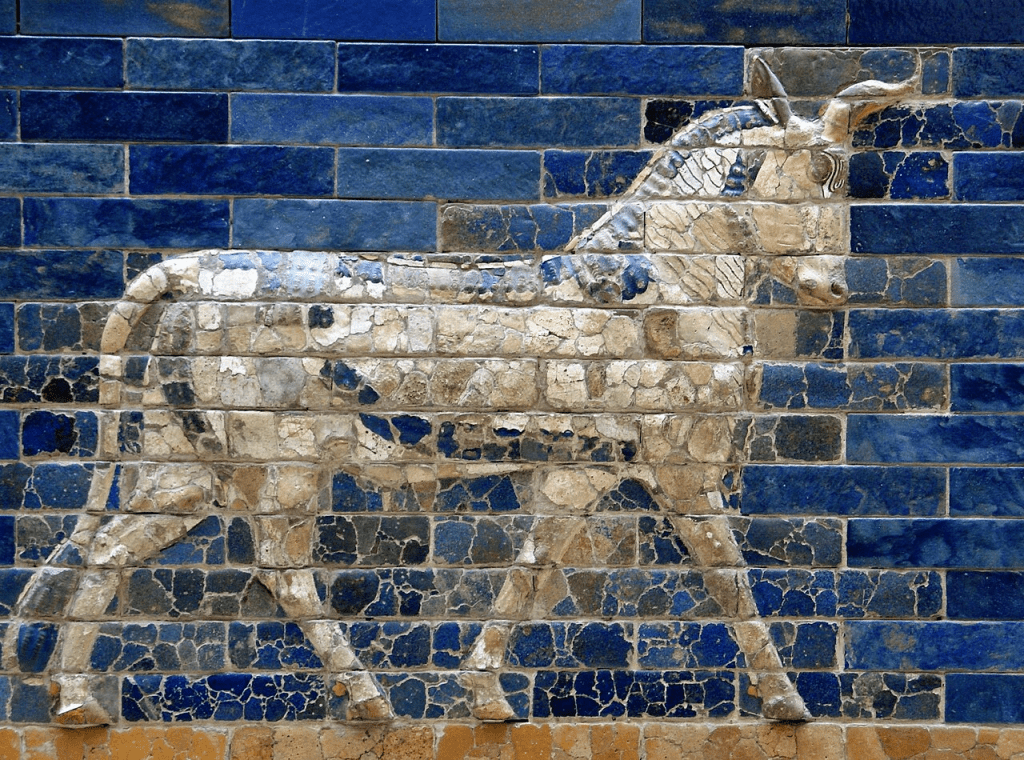
O, sorry, you had to read about the rise of Hitler in what you thought was an article about animals? You’ll make it; unfortunately it’s relevant. Back to animals for a bit. This is a depiction of an aurochs (Bos primigenius) from the Ishtar Gate of Babylon, constructed in the reign of Nebuchadnezzar II around 569 BC. The aurochs was a known animal in the Iron Age Near East, referred to in both the Bible and in Mesopotamian texts, where it was a prestigious animal to hunt for kings and others looking to display their strength. Photo by Josep Renalias.
While all this was going on, the Heck brothers were seeing success with the wisent program and began to think about other animals that could be the subject of breeding programs and used to restore Europe’s former wildlife. They took interest in the aurochs (Bos primigenius), but unlike the wisent which had only gone extinct in the wild, the aurochs was extinct altogether. These large wild bovines could have a shoulder height of up to 1.8 meters tall and were extremely widely distributed across Eurasia and North Africa in the Pleistocene, hunted by both Neanderthals and Homo sapiens, with ritual use of their bones by the former and painted depictions by the latter. As the ice retreated and climates changed, so too were there changes in how humans interacted with the aurochs. Two separate species of cattle were actually domesticated from the aurochs: Bos taurus (which most readers probably think of if I say the word “cow” or “bull”) starting from around 8,800 BC in the Fertile Crescent and Bos indicus (the zebu) starting around a millennium and a half later in the Indus Valley. As the Neolithic transition gave way to urban civilization, domesticated bovines became far more numerous than the wild cousins they split off from, but they were also a lot smaller. As such, the giant wild untamed aurochs became a rather prestigious animal for the upper classes to hunt in many civilizations from the kings of Mesopotamia to the heroes of Greece, who fashioned their horns into drinking vessels. But by the early modern period, habitat loss, hunting, and competition with their domesticated cousins had pushed the aurochs into just a few small territorial holdouts and the last known one died in 1627 in what is now Poland. The Heck brothers were aware that modern cattle had been bred from the aurochs and so invented method number 1 in the history of de-extinction: back-breeding. Back-breeding is taking the descendant species of an extinct one, such as a domesticated animal developed from a wild animal, and selectively breeding it for traits deemed ancestral.
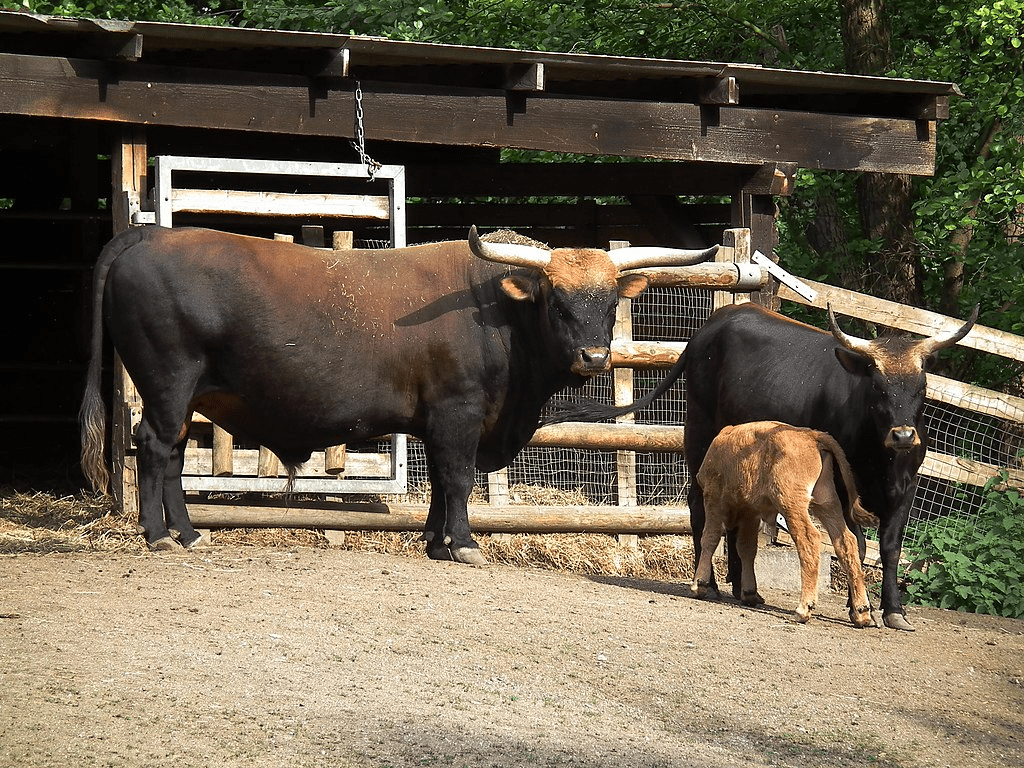
Heck cattle, a breed of cattle created as a result of the Heck brothers’ efforts to back-breed the aurochs from domesticated cattle (Bos taurus). Photo by Wikimedia contributor 4028mdk09.
Heinz became head of the Munich Zoo in 1928 while Lutz inherited the Berlin Zoo with the passing of their father in 1932. They each began their breeding programs separately and while many of their original notes have since been lost, we do know they were informed by many sources such as history, archaeology, and mythology in producing their cattle, which I will call Heck cattle here, since that is the name they are called by today, though the brothers would have considered the results de-extincted aurochs. Lutz in particular, an avid enjoyer of hunting, associated the aurochs with a fighting spirit and specifically gave his cattle a streak of Spanish fighting bull. In the background, as the project was getting off the ground, one Adolf Hitler was made chancellor of Germany by the president Paul von Hindenburg in early 1933, shortly before a fire destroyed the Reichstag, the German parliament building, giving Hitler the pretense to give himself emergency powers and purge the government of leftists and other critics. The project had begun in the waning years of the Weimar Republic but it was now in the new order of Nazi Germany that the brothers declared their success. At the same time, they also bred horses to resemble the tarpan, the wild ancestor of the domesticated horse (Equus ferus, both the wild and domesticated varieties here are considered part of the same species), creating a breed known as Heck horses.
Nazi Germany was a fully totalitarian regime which sought to model every facet of society under it to fit its violent idealistic vision. It was a dangerous place to be an intellectual where ideology was required to operate along state lines and academics who didn’t play along could be dismissed or worse. Heinz was not liked by the new order. He was quiet about it but he does not seem to have agreed with the Nazi ideology of natural purity and he was arrested by the regime, which cited his previous brief marriage to a Jewish woman (considered race treason within the ludicrously antisemitic segregationist ideology of Nazi Germany) and suspicions that he was part of the now-illegal Communist Party (which doesn’t seem to have been true). He was one of the first people interned at the concentration camp of Dachau in southern Germany, which originally housed political dissidents but would eventually grow to become a major forced-labor camp where Jews and other persecuted peoples would work and die and in some cases be medically experimented upon. Heinz got off lighter than most of these later prisoners and was released shortly, but it was pretty clear that he would never rise that high in Nazi Germany. Other than a history of the aurochs he wrote in the 1940s, he faded somewhat into the background. Lutz, meanwhile, ate the forbidden fruit.
If you are familiar with the political history of the Third Reich, then you naturally recognize the name of Hermann Göring as one of its major figures. Göring had been a flying ace during World War I and after the war became one of the earliest members of the Nazi Party, cozying up to Hitler through his entire rise into political prominence. Following the takeover of the government, he had been given a vague and flexible ministerial position that took on a variety of different unrelated roles, overseeing many of Hitler’s early reforms. Most notably, though, he became chief of the Luftwaffe, the German air force, in 1935, and it was widely understood that he was a designated successor, should anything happen to Hitler. Göring was effectively the second most powerful figure in the Reich aside from Hitler and, luckily for Lutz Heck, he was very into hunting and had secured political authority over managing hunting and forests amidst everything else. Lutz and Göring managed to become hunting partners and soon after Lutz increasingly operated on behalf of party aims, such as his trip to Canada to acquire animals in 1935 where he also spoke publicly to promote national socialism. In 1938, Lutz Heck wound up as head of the Nature Protection Authority, essentially the Nazi conservation minister. On September 1, 1939, World War II began in Europe as Germany invaded Poland, which had become independent after World War I and which Nazi propaganda emphasized taking back, prompting Britain and France to declare war on the Reich to curb Germany’s aggressive repeated expansionism.
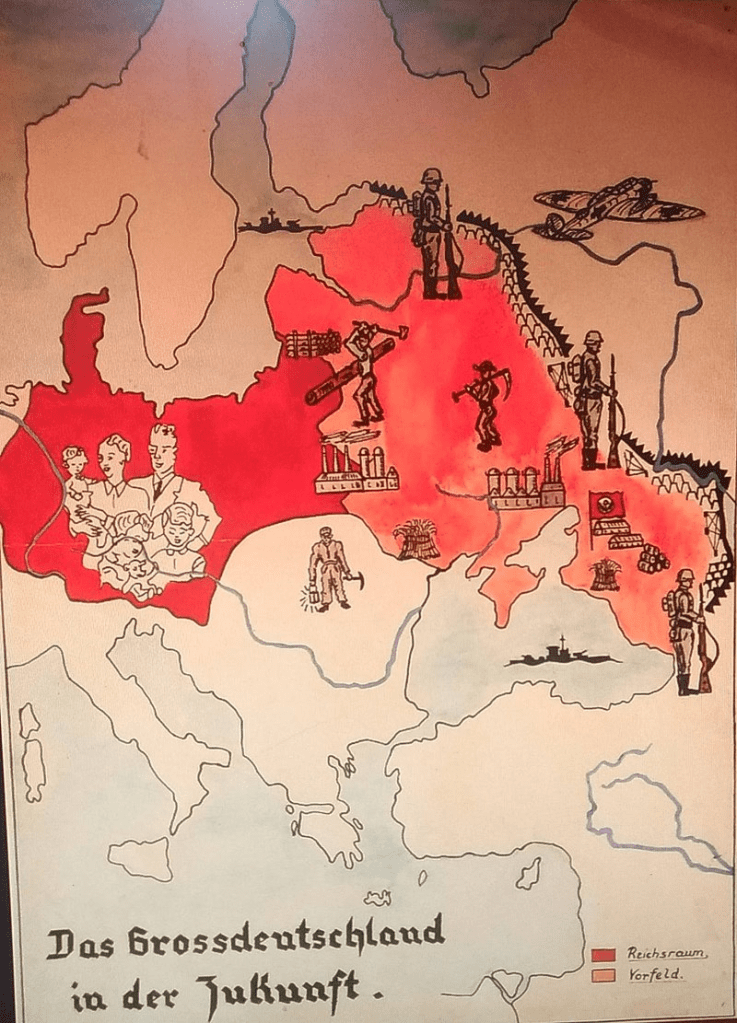
“Greater Germany in the future.” This Nazi propaganda map from 1943 shows an imagined fulfilled Generalplan Ost in which a German-settled east (from which all other peoples would be killed, enslaved, or removed) produced food and industrial goods for Germans to live prosperously back home. At the time this poster was made, all of that land was German-occupied but within the next two years the USSR would drive the Nazi war machine back all the way to Berlin. Image put on Wikimedia by PraetorXXXfenix but the original artist was some Nazi fuck whom history has forgotten.
That year German authorities began to produce what would be called the Generalplan Ost or GPO, the master plan for the east, a genocidal plan to remake Eastern Europe demographically and environmentally. Despite its formal sound, the GPO was in constant flux for the remaining history of the Reich, but it is possible to summarize its general goals. Hitler had made a major ideological goal in Lebensraum, living space, which referred to the idea that the German people must increase the territory in which they were able to propagate. Within the purist racial mindset of Nazism, this meant clearing that land of whatever other people groups had been there through extermination, enslavement, and expulsion. The GPO proposed that the lands to the east of Germany in what had previously been Poland and the Soviet Union would be the primary subject to this expansion project. Major cities like Warsaw would be removed from the map and replaced with entirely German colonial settlements, which were described in terms that appealed to a primeval romantic rural fantasy, and bountiful harvests would feed a German population boom there and back home. The Nazis generally thought of this as a postwar plan that would follow final victory, especially against the Soviet Union, which they invaded in 1941 to begin to make it possible, adding yet another front to their world war, which had already made them masters of continental Europe… for the time being. And in case you forgot that you’re reading an article section devoted to bison, cattle, and horses, this is what Lutz Heck was needed for: preparing the animals that would populate the landscape of a fulfilled Generalplan Ost, animals which Göring and Lutz associated with a primeval Aryan-ruled landscape of long ago. That and Göring liked hunting and actively filled his private forest in Poland with all these animals. All of this to service the same large-scale project that was also being invoked as millions of people were being rounded up and sent to death camps. As an observation that many sources have made on this issue as well, there is something to be said here about the relationship between breeding an idealized purified species and the eugenics which the Nazis practiced.
We know in hindsight that the final victory envisioned by the Nazis never happened thankfully. Lutz Heck’s access to support was very much tied to that of Hermann Göring, which relied on the opinion of Adolf Hitler, whose pleasure with Göring decreased after 1941. As commander of the Luftwaffe, Göring had been the first person Hitler went to on the matter of both launching aerial attacks and defending against them, but after the heroic defense of the Royal Air Force in the Battle of Britain in 1940 which destroyed the Reich’s plans to invade the UK, the commencement of heightened British (and now American) bombing campaigns against German cities in 1942, and the ongoing failure of the Luftwaffe to properly support the Germans’ slowing advance in the war with the Soviet Union, it was hard for him to look good. Amidst all this, Göring was increasingly spending time in his luxurious private estate full of exotic “de-extincted” huntable animals and expensive goods taken from the collections confiscated as part of the literal Holocaust. In 1943, the Soviet tide turned and the Red Army began driving the Germans westward. The next year, American, British, Canadian, French, and other forces landed on the beaches of Normandy to begin the liberation of France and then push east. Nazi propaganda was unrelenting though. It was, so it said, the German destiny that they would still win and create their final plans, no matter the present difficulties. These delusions were actively costing both the lives of innocents and of German manpower. In terms of nature preservation, the hypothetical job of Lutz Heck and the thing the brothers had first wanted to work on after World War I, it was hard to say that the wars being waged by the regime Lutz now was part of were anything but intensely destructive once again to the biosphere of Europe. There were more important things to keep track of, but for the record the wisent was not doing well.
If you have heard of Lutz Heck before this, it may be in the context of the Warsaw Zoo. When the Germans took over Poland, the zoo was managed by Jan and Antonina Żabiński and sometime later Lutz was tasked with pillaging the zoo of what he considered “valuable” animals, one of many examples of the German occupation taking what it pleased from occupied lands. But unbeknownst to him, these two zookeepers would be remembered more positively after the war for what they did in secret. Jan kept his post and was approved as a park manager under the occupation, which gave him the clearance he needed to enter the Warsaw Ghetto, where Jews had been forced to live sectioned off from wider society. Using connections and the holding space that came with a partly pillaged zoo, the Żabińskis would take some 300 Jews through the zoo to escape the horrors of the Holocaust. In 1944, the people of Warsaw knew that the Soviets were coming, but following the previous Soviet invasion of their country in 1939 (several weeks after the Germans, splitting the country), they knew that Soviet dominion would simply mean rule by a different foreign autocracy. So the Poles revolted against the Nazis on their own terms in the heroic Warsaw Ghetto Uprising, which unfortunately failed, leading the Germans to senselessly level the entire city. Jan was arrested in this rebellion but Antonina continued her work in his absence, aiding people to freedom. After the war, they helped build the zoo up again. I bring this story up not because of its relation to de-extinction, but because I think it’s important to see that people with similar positions in the world to the Heck brothers responded to the Nazi situation differently than they did. I think it’s important to keep this in mind. Important to Lutz Heck and Hermann Göring, however, was the latter’s private estate in the Białowieża Forest. As the Red Army saw such an important location as a target, it fell under orders to be captured and in the process most of the large animals there were killed, including the wisents and the “de-extincted” cattle and horses.
1945 was the year of judgement for the Third Reich. On April 16 of that year, the Soviet Red Army began to attack Berlin and the forces of the United States, Britain, France, and others were flooding into western Germany. Death camps were being liberated and German forces were deserting, being captured, or getting destroyed. Hitler ordered fights to the end and even the Hitler Youth were being pressed into service, all while the dictator himself hid in the Führerbunker. On April 22 as the city was actively being invaded, Hitler sent a message to Göring and other top officials informing them of his intention to commit suicide instead of being captured and humiliated. Göring asked if he could assume control of the government in his stead but was told that this constituted an act of insubordination and he was arrested. On April 30, the führer put a gun in his mouth and blew his brains out, doing a rare service to the world. In the opening days of May, it was clear which way the battle was going to even extremely ideologically driven Nazis and many of them started to recognize that they would need to surrender to someone and the Soviets weren’t the most easygoing captors, prompting a lot of Nazi officials to move west to surrender to the nearby Americans. This included both Hermann Göring, who had escaped his holding place, and Lutz Heck, who made his way to Bavaria and whose animals were mostly killed in the battle. The war in Europe ended on May 8, 1945. Göring was sentenced to death for crimes against humanity at the Nuremberg Trials in 1946 but he killed himself by cyanide pill the night before his scheduled hanging. All theaters included, World War II was the deadliest conflict in human history, totaling some 70 to 85 million deaths. Maybe it is not surprising that the history of de-extinction is so tied up with this war, because so is almost everything else in the human history that has followed.
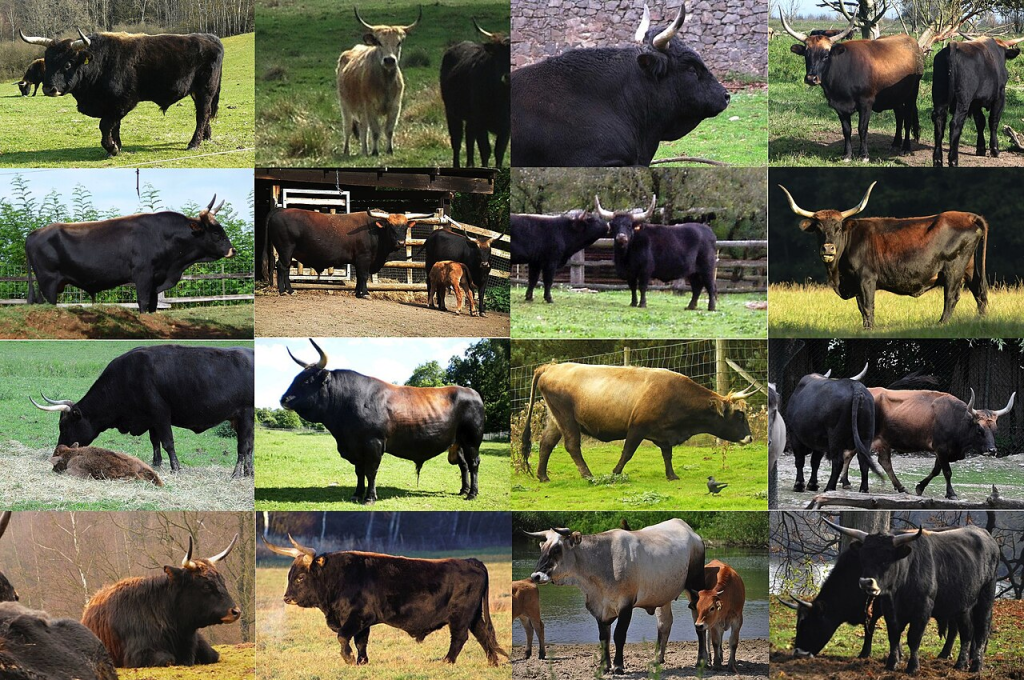
Heck cattle collage by Wikimedia contributor DFoidl.
Lutz Heck got off alright, except he lost his post at the zoo in Berlin and his animals had been largely destroyed. But Heinz Heck, on the other hand, always further from the center of the Reich that the great powers of the world had so righteously destroyed, had his collections at the zoo in Munich, which, despite taking damage in the war, was still able to recover enough to reopen the very month that the war in Europe ended. Heck cattle today have been distributed to many parts of Europe and they have some distinctive traits, such as their very pronounced horns and their climatic resilience. Because the Heck brothers had promoted them as the aurochs returned, they became popular to pick up in zoos in Germany. But with the end of the war and the detachment of the narratives about these cattle from those of the old regime, it became extremely apparent that they remain very distinct from the still-extinct aurochs. Breeding for the aurochs’s appearance had essentially been eyeballing it, especially as the structure of DNA was not even understood at that point, meaning the Heck brothers had no way to compare the genetics of the cattle with their extinct ancestors’. Heck cattle are no larger than most domestic cattle and are certainly smaller than the typical aurochs. Nevertheless, it seems that they have a very important place in conservation today. Modern Europe is largely devoid of large grazing animals, which normally play an important part in grassland ecosystems where they regulate invasive species and aid in nutrient recycling (through their nitrogen-rich shit and yummy corpses) and so help these environments to be more stable. In the 1980s, a Dutch polder (an area of land created by artificially holding back water using dikes and seawalls, common in the Netherlands) by the name of Oostvaardersplassen became the 56-square-kilometer center of an ecological experiment: to try to stabilize a newly made grassland through the introduction of grazers such as deer, ponies, and notably Heck cattle. Around 600 of the cattle roam free and wild here and seem to be doing largely alright. The aurochs has not returned, but something novel has been made and maybe, as Europe addresses its tragic ecological history, the true likeness of the Heck cattle to the aurochs will be found in the ecological niche they will play. Detached from ancient Aryan fantasies of course.
Muted Stripes
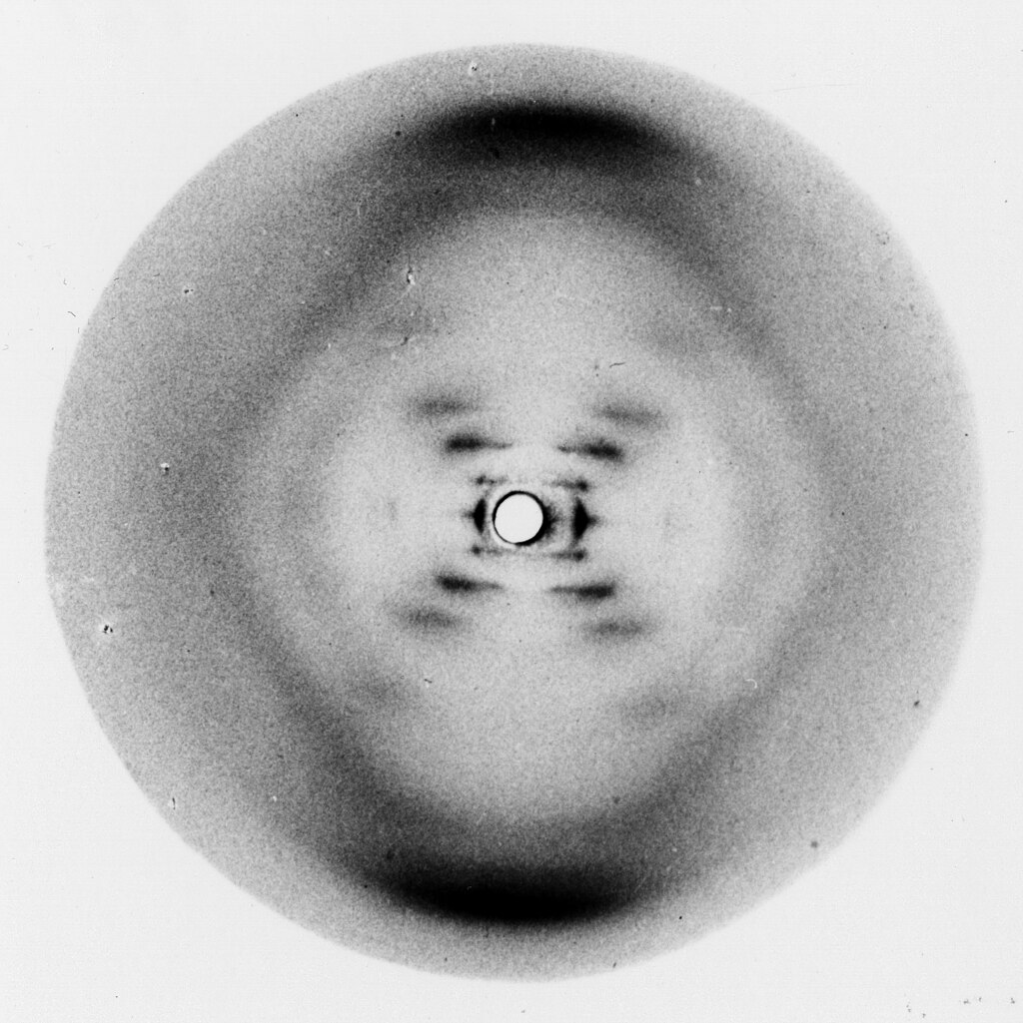
The famous “Photo 51,” taken by Raymond Gosling under the direction of Rosalind Franklin in 1952 using an x-ray diffraction process on DNA. This photo was key to the reconstruction of its structure.
What separates, on a scientific level, the early attempts of the Heck brothers from many more modern projects to bring back extinct organisms is the knowledge of the structure of DNA. Genetics as a scientific theory is actually rather old, originating with Austrian abbot Gregor Mendel experimenting with the heritability of traits among pea plants, identifying dominant and recessive traits and publishing his statistical findings in 1866, though they would largely go unnoticed until rediscovery and reconfirmation in 1900. In a completely separate development in 1869, Swiss physician Friedrich Miescher was able to isolate and identify a substance from the nuclei of cells suspended in the pus left in discarded surgical bandages, calling it “nuclein,” which we now recognize as largely DNA. For decades, researchers would pick this material apart, gradually identifying components until in 1928 the British bacteriologist Frederick Griffith observed that different strains of pneumococcus bacteria (Streptococcus pneumoniae) could pass traits between each other through material interaction, something that a Canadian and American research team would confirm was DNA in 1943. So the medium of Mendel’s inheritance patterns was this chemical but how information was encoded into it remained a question. The breakthrough came in 1952 when a student working in the lab of British chemist Rosalind Franklin used X-ray diffraction to take an image of DNA which was then shown to American geneticist James Watson and British molecular biologist Francis Crick. The latter two presented, based largely on the image as well as other information, a double-helical structure of the DNA molecule (though it’s important to note here that Franklin herself seems to have done much of this work as well and was given minimized credit at the time). This revolutionized understandings and further advanced conceptions of the genome. But this did not revolutionize de-extinction overnight because the technology to sequence and edit genes was still coming. Keep this bit of background in your mind for later. Let’s talk zebras.
Zebras are actually a few different species in genus Equus, which you Latin students can already guess includes horses. The genus has seven living species, which are grouped using the rare taxonomic category of subgenus between genus and species, based on coming from speciation events in little groups. In subgenus Equus we have Equus ferus, which is both the wild and domestic horse. In subgenus Asinus we have the donkeys of Equus africanus (ass), Equus hemionus (onager), and Equus kiang (kiang). In subgenus Hippotigris (yes, horse-tiger; it’s excellent) we have the zebras of Equus grevyi (Grévy’s zebra), Equus quagga (plains zebra), and Equus zebra (mountain zebra). Today our interest lies with the plains zebra or formerly Equus burchellii, which as of my time of writing this is still how it’s labeled at the Parc Zoologique de Paris where I was the other day. (Update your signs.) The reason for the change, which occurred only in the last couple decades is that an extinct variety of zebra known as the quagga was found via genetic analysis to be a subspecies within the same species. Since the quagga was technically described by science first, its scientific name became the winner of the merge in accordance with the taxonomic principle of priority where older scientific names are considered generally more valid. So what were the quaggas?
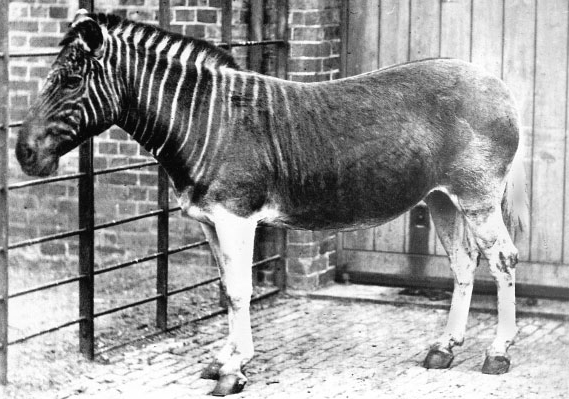
A quagga (Equus quagga quagga) at a zoo in London in 1870 in a photograph taken by one Frederick York.
Quaggas were once a common subspecies of zebra in what is now South Africa. They were easy to identify because they had a relatively unique color pattern of primarily brown with white stripes limited to the front part of the animal and white legs. In 1984, skin from a quagga kept in a museum became the first sample of DNA (specifically mitochondrial in this case) taken and partially sequenced from an extinct animal, representing a giant step in the story we’re telling today. Multiple quagga samples would be taken until by the early 2000s it became more possible to place the quagga within the evolutionary tree, where it became clear that it was a divergent population of plains zebra and that the animals actually had a relatively low genetic diversity, signaling that divergence as recent in grand geologic timescales, as recently as between 290,000 and 120,000 years ago, when our species Homo sapiens was already proliferating through the African continent. Some other African ungulates seem to have gone through a similar period of differentiation around this time and it has been suggested that Late Pleistocene climatic shifts may have caused habitat fragmentation and rearrangement across the continent that drove its regional diversification. Being a recently emerging animal in southern Africa makes the quagga a somewhat interesting case in the history of animals which have gone extinct in the Holocene in that it spent its entire history alongside humans and even thrived in the same environment with them. Quaggas are depicted in Khoisan rock art and the word “quagga” is itself an onomatopoeic word derived from one in the Khoikhoi language emulating the animal’s call, which older anthropologists transcribed as “kwa-ha-ha” and similar. (As a sidenote, a lot of sources you read on this topic, including the website of the Quagga Project itself, use the term “Hottentot” for the Khoikhoi language. This is, to my understanding, widely considered a historical Boer racial slur for this ethnic group which has an unfortunate legacy in South Africa’s racial history. If you decide to dive further into this topic, you should be aware of that.) The quagga was first described in European science in 1778 by Dutch naturalists after that country’s colonization of the Cape region. It became known as a relatively easy animal to hunt and so it was frequently targeted for its skin and meat, especially by Boers, the people descended from Dutch settlers who increasingly settled inland in their own independent republics following Britain’s acquisition of the Dutch Cape Colony in the early 1800s. Quaggas were recognized as more docile than other zebras (which can actually be rather aggressive and territorial animals), often in herds of only between 15 to 30 and accompanied by ostriches and wildebeest. Since horses often died to sleeping sickness in southern Africa, Cape Colony even considered the quagga as a candidate for a domestication project and local farmers often allowed them to be near livestock as they might act aggressively towards predators and keep herds safer. It was fashionable to capture specimens for zoos in Europe, two quaggas in London becoming rather notable for at times pulling a carriage around Hyde Park. But as a prized hunted animal and as a competitor to domesticated grazing animals in certain settled regions, pressures were kept up on the quagga before extinction was even recognized as a looming problem. The last known living individual died in a zoo in Amsterdam on August 12, 1883, though naturalists did not recognize it as the last individual at the time and the zoo even asked for anyone who was willing and wanted a reward to bring them a new one, possibly at least partly due to confusion created by the general use of the word “quagga” in Afrikaans to refer to all zebras.

Reinhold Rau with a quagga foal specimen in a photo from the Quagga Project.
The roots of the idea of bringing back the quagga actually go back to Lutz Heck himself who suggested in 1955 that breeding programs similar to his experiments in cattle and horses might work to produce a plains zebra with a similar pattern to the quagga, but this was after the height of his particular influence and he would never oversee this project. This is where naturalist Reinhold Rau entered the picture, after having been inspired by a quagga foal specimen at the South African Museum in Cape Town in 1969. In 1971, he went on a European museum tour to investigate quagga specimens and hatched a plan to try to revive them through selective breeding of the plains zebra that focused on a brown color and reduced stripes. Initial attempts to propose the idea to various parks in South Africa, Namibia, and Swaziland were met with disapproval but Rau remained interested and was contacted by a veterinarian by the name of J.F. Warning, who had been an old friend of Lutz Heck, in 1985, one year after the first quagga DNA samples had been published, interested in carrying out the project, which they finally started in 1987. The Quagga Project began with the capture of nine zebras from Etosha National Park which were then taken to a farm known as Vrolijkheid near the town of Robertson in the Cape. Within the next several years, the first foals were born to the project, which began importing a larger number of zebras, reaching 83 by 2004, when the project had 11 locations. Feeding a large number of zebras proved a financial issue for the private project and so gradually expansion has focused on allowing more of the zebras to do natural grazing. Some foals have also been sold off.

Some of the selectively bred zebras of the Quagga Project in a photo by Wikimedia contributor Ogmus.
In its nearly four decades of operation, the Quagga Project has achieved a general success at breeding brownish zebras with reduced stripes and their website keeps a studbook of individuals which shows its efficacy very well. Rau passed away in 2006 but the project continues after him, having bred the animals now across more than five generations, whittling down a large genetic pool into a more focused one which emphasizes traits associated with the quagga. Since the quagga is considered a subspecies of the plains zebra, the project is generally considered more viable than some other de-extinction concepts that focus on entire extinct species and the website of the project even endorses the idea that extinct species cannot be truly revived. The website presents the extinction of the quagga as a “tragic mistake made over a hundred years ago through greed and short sightedness” and therefore as something which it can rectify. It continues a tradition of the concept of de-extinction being tied to conservation. The animals are not exactly contiguous with the populations historically known as quaggas and so biologists are unlikely to recognize them as identical, so the title of “Rau quaggas” has been proposed for the new animals. I wish these newcomers well.
Life… uh… Finds a Way
(This section contains major spoilers for the Jurassic Park novels and books. They are a rather important part of telling our story.)

The original cover of the novel. This book is really good.
American science-fiction author Michael Crichton’s 1990 novel Jurassic Park references efforts regarding the quagga very briefly, where its DNA extraction in 1985 is part of what gets InGen, the powerful central corporation in the story, interested in the idea of resurrecting dinosaurs. Reading between the lines, it’s not hard to get the idea that this development had some part in inspiring Crichton as an author, though he was apparently working with the idea in some capacity as early as 1981, but writing the put-together version began in 1988. It published after two years of redrafting, with early readers not liking early drafts. The final version though was a well-received masterpiece. In the next paragraph, I will spoil some things.
Jurassic Park opens with a prologue that reflects on the rapid pace of scientific progress in the modern world, specifically in the field of genetics, which is compared to other revolutionary technological advances such as atomic theory and computing. The central themes of the movie are set up with the idea that science, which was once open and about discovery, was increasingly being taken up by private companies that did things in secret, to try to be the first, and for profit. In the novel, the corporation InGen, which is run by a shady and eccentric businessman named John Hammond, attempts to secretively set up a specialized theme park on a remote jungle island off the Pacific coast of Costa Rica, which is effectively unregulated by any country. Investors are skeptical as the park largely does not tell many of them exactly what it is, which sets up the central conflict as several horrible workplace deaths at the location harm goodwill and so Hammond seeks out a number of specialists to tour the park and give their expert approval. It turns out that what InGen does is take the genetic material of dinosaurs out of their fossils and out of the stomachs of insects that have drank their blood and become trapped in amber. (This is a science-fiction device as the preservation of aDNA going back to the Mesozoic Era when non-avian dinosaurs lived is entirely unknown; since DNA is a complex molecule that breaks down easily, even in a relatively preserved environment like inside amber, it will become damaged and unreadable at such timescales.) Using this material, they’ve created a park with living non-avian dinosaurs and pterosaurs that they intend to show is safe for visitors who want to see these animals. When industrial sabotage from another biotech corporation leads to a systems shutdown and widespread animal breakouts leading to many deaths, the various protagonists all have to struggle to bring things back under (the illusion of) control and, when that fails to occur in any definite way, to escape and destroy the situation that’s been created.
Michael Crichton’s interest in the state of science he’s commenting on is clear throughout the text and he comments sometimes specifically on certain developments in paleontology, genetics, and even computing. There are a lot of comparisons to be made between the novel and Frankenstein in its unease with the direction of unchecked science and the inability of InGen to properly reckon with what it’s done. Importantly, since the novel went on to become a best-seller, it was extremely impactful on how audiences saw the idea of de-extinction and for most readers was probably the first time they’d really considered the idea. While the novel seems to take the strong stance that bringing back dinosaurs without really knowing what that entails is a dangerous and reckless idea, plenty of readers also got the opposite notion that the idea is really cool. Both of these takeaways exploded in popularity three years later when Steven Spielberg’s movie adaptation of Jurassic Park hit theaters and became the highest-grossing movie of all time released up to that point.
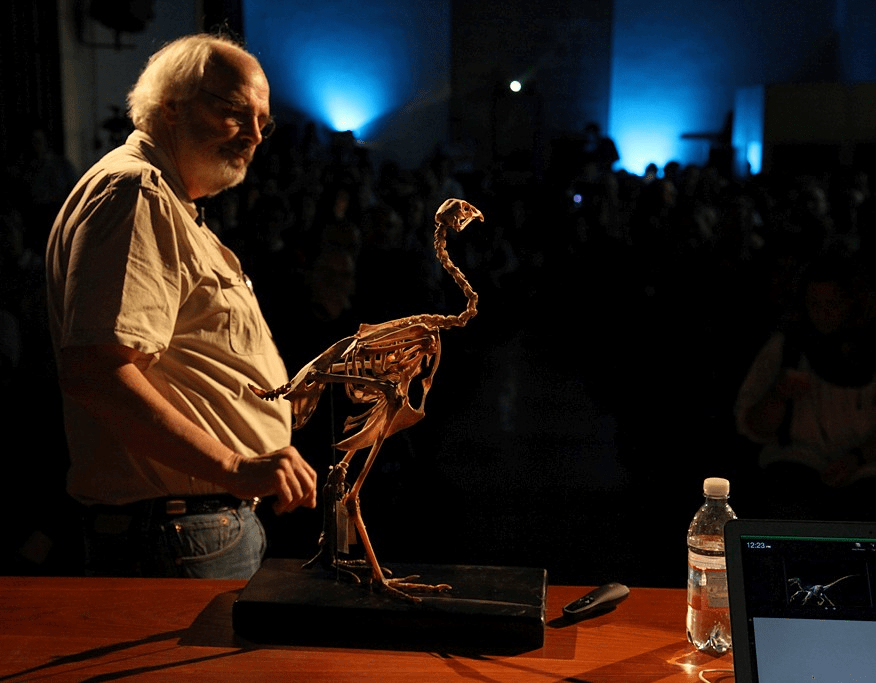
Paleontologist Jack Horner with a bird skeleton in Milan, Italy, posted by the Flickr account of the Meet the Media Guru event.
While the world went crazy over Jurassic Park, one paleontologist managed to find his way to the center of attention over it. In the 1970s, Jack Horner made news by publishing on the nesting habits of the large Late Cretaceous hadrosaur (a group of duck-billed herbivores) dinosaur Maiasaura peeblesorum, whose fossils and nests were found in large numbers in the Two Medicine Formation of Montana, USA, from some 75 million years ago. This discovery provided the first direct evidence that at least some non-avian dinosaurs nested in large colonies like many modern birds and also that they provided parental care for their young. It was a particularly important development in the Dinosaur Renaissance, an overturning of how dinosaurs were thought about in this period that changed the paradigm from slow lumbering reptiles to fast-moving warm-blooded intelligent creatures more like birds. Crichton was familiar with Horner’s work and even wrote the paleontologist in Jurassic Park, Alan Grant, to have worked on this same Maiasaura discovery with Horner, who is mentioned by name in the text. When Spielberg produced his movie adaptation, Horner became the paleontological advisor for the movie and then later for its sequels. (It is also around this time that Jack Horner took the public position that he is now infamous for in paleontology circles, suggesting that Tyrannosaurus rex was an obligate scavenger, which he has used his platform to push despite that position being widely considered completely contrary to the evidence by experts specializing in the animal.)
The same year that the original Jurassic Park movie released, a NOVA documentary titled “The Real Jurassic Park” featured both Jack Horner and Bob Bakker, probably the most notable figure of the Dinosaur Renaissance (mentioned in both the novel and movie script of Jurassic Park), discussing the possibilities of piecing together the genetic material of dinosaurs, creating viable embryos, and then caring for and managing the creatures that result. The documentary is narrated by Jeff Goldblum, who plays the naysaying mathematician Ian Malcolm in Spielberg’s film, and frequently includes commentary from Michael Crichton himself. At the time, there was increased interest in the soft tissue of dinosaurs and Horner shows off the fossilized bones of a Tyrannosaurus on which microscopic chemical research was being done. At the time, it was considered a real possibility that the field of dinosaur paleontology, which was increasingly diversifying outside of just studying fossilized bones, might make real leaps in finding preserved prehistoric biochemistry and maybe even that elusive DNA. Horner and the like considered the possibility that it would be found in any undamaged state, however, to be extremely unlikely and so the documentary cuts to Bakker who explains another idea. Birds, as the direct descendants of dinosaurs (and which are, within modern phylogenetic classification, dinosaurs themselves), have many legacy traits that are simply dormant within the genetic code. Even by the time of this documentary, geneticists had for example identified a gene that could produce tooth-like structures in chicken embryos. It was hypothesized that a reconstructed dinosaur might have a combination of paleo-DNA and the engineered DNA of modern relatives, grown in a special incubation facility. Beyond that would lay further challenges such as ensuring the animal’s immune system could survive modern microorganisms, producing enough food in the proper manner to keep it fed, having a working climate, and creating contingency plans for animal escapes.
In the coming years, scientists largely came to agree that actually getting DNA from that far back was effectively impossible, with a liberal upper limit for DNA that can be sequenced at around 1.5 million years old, though most samples are severely degraded long before that. But the idea of engineering a bird remains plausible. Horner began to focus on maniraptoran dinosaurs, animals like Velociraptor, which were closely related to the lineage that became birds. In his 2009 book How to Build a Dinosaur: Extinction Doesn’t Have to Be Forever (a book which was somewhat inspired by his early access to a very early version of the script for Jurassic World, the fourth movie of the Jurassic Park cinematic franchise, which eventually released in 2015), he explored the idea further of a “Chickenosaurus.” A dinosaur created by modifying a chicken to have traits such as sharp teeth, a long tail, and grasping fingered hands would not be a revived ancient species of dinosaur by any means, but it could have a lot in common with one and the genetic research into making one could have positive effects for future genetic science, including potential applications in cancer medicine. The Chickenosaurus project did begin and saw successes at triggering genes in chicken embryos, furthering science and understandings of gene expression. That it was largely funded by George Lucas, director of Star Wars, shows, I suppose, once again how deeply tied up these interests are with cinema and the relationship science-fiction and science have in our modern world. Horner predicted that a Chickenosaurus would exist in about ten years, but 2019 came and went with no such creature.
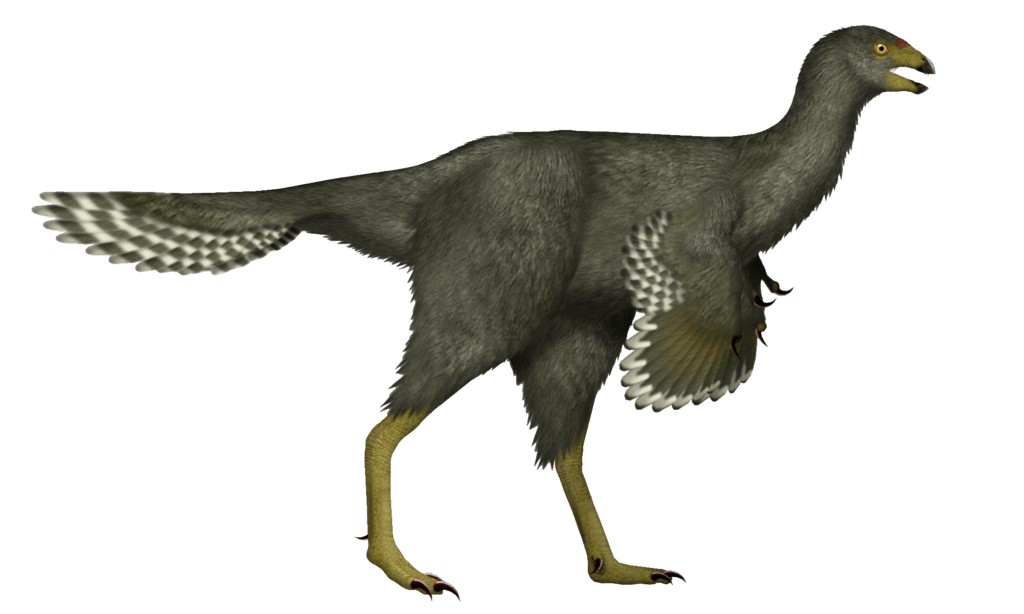
A restoration of the Chinese Cretaceous dinosaur Caudipteryx zoui by Wikimedia contributor UnexpectedDinoLesson. Like with several other types of feathered dinosaurs, Caudipteryx fossils preserve some structural pigmentary data that allow us to have some idea of the coloration and patterns it may have had in life.
Jurassic Park looks more unlikely than it did when Crichton released his novel, but that doesn’t mean the discourse around it hasn’t been important in significant ways. Much as we justifiably valorize the scientific process as an amazing tool of knowledge generation and assessment, it is at the end of the day a cultural construct and is carried out entirely by humans within the cultural zeitgeist of society. Jurassic Park has now been the standard for how the public understands dinosaurs for more than three decades and it looms large in both scientific and popular circles. For the recent history of de-extinction, it sets widespread expectations for what is entailed, it generates excitement about the awesome power of science and ancient animals, and it also provides the most powerful criticisms as to why the practice might be dangerous. For those interested in microscopic studies of ancient dinosaurs though, amazing things have come from them in recent years, such as a better understanding of the structures and even pigments of many dinosaur feathers, such that they can be reconstructed in an approximation of true color. One of these feathered dinosaurs which has been extraordinarily preserved is Caudipteryx, which lived in Early Cretaceous China around 125 million years ago. In 2021, a team of scientists in China published that microscopic studies of fossilized cartilaginous structures from the animal in exceptional silicate preservation revealed not only identifiable cells but identifiable cellular nuclei, including preserved chromatin (the material formed of DNA when it clusters together) structures in cells that were undergoing mitosis (cell division). This isn’t DNA in any form that can be sequenced but… I think it is clear we still have a lot to learn and which can be learned.
Constructing a Lost World
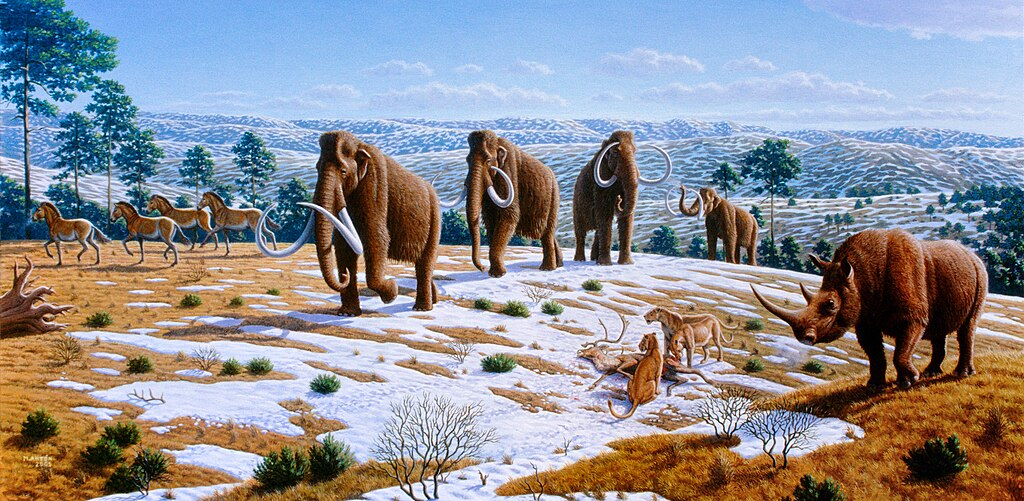
This illustration by Mauricio Antón depicts a steppe landscape and some of the animals of northern Spain in the Pleistocene. Among the extinct fauna here are the woolly mammoth (Mammuthus primigenius), the woolly rhinoceros (Coelodonta antiquitatis), and the cave lion (Panthera spelaea), while living species include the wild horse (Equus ferus) and the reindeer (Rangifer tarandus).
What if the focal point of restoring what was lost is not put on reviving extinct species but rather in repairing damages to ecosystems that have suffered these losses? When geologists and paleontologists refer to the Pleistocene Epoch, they refer to a period of time between 2.58 million and 11,700 years ago when a series of glacial phases dropped average temperatures, especially in far northern latitudes, and produced vast ice sheets that blanketed large portions of Eurasia and North America. (We are actually still in an interglacial phase of part of this cycle and if you are interested in how this works, I recommend reading my article on this blog about the extinction of the North American megafauna.) During glacial phases, sea levels dropped dramatically and even south of the ice sheets, permafrost permeated the soil, reducing tree growth and replacing boreal forest with a vast steppe tundra, often called the mammoth steppe, which reached from Western Europe across Central Asia and all the way across Beringia and into North America. In Eurasia, nature’s menagerie included the famous woolly mammoths as well as other megafauna grazers such as the woolly rhinoceros and the colossal deer known as Megaloceros. More familiar grazers today included musk oxen, reindeer, horses, bison, and camels. And of course predators such as cave lions and wolves fed on the various herbivores. The large number of megafauna in this region has caused some ecologists to nickname it “the northern Serengeti” and during the last glacial phase this region had somewhere around 100 times the animal density of the modern Arctic.
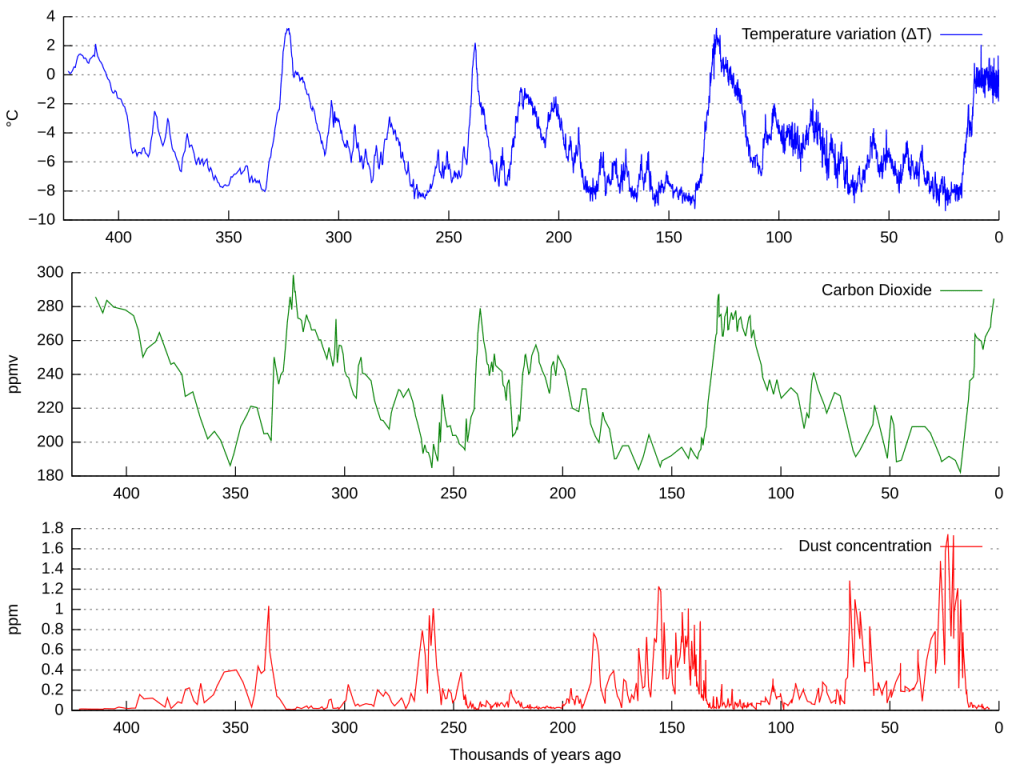
Data compiled by NOAA using an ice core from Vostok Station in Antarctica, displaying global average temperature variation (compared to “pre-industrial averages,” that is, the average global temperature just prior to the Industrial Revolution) over the last 420,000 years, as well as carbon dioxide and dust concentrations in the atmosphere. Note that the carbon dioxide levels mirror the temperatures, due to feedback loops in both directions.
The secret to this amazing animal density was a beneficial feedback loop that enabled the environment to be “high-productivity,” that is that natural biological resource cycles like plant growth and consumption occurred very quickly. Grasses in particular grow much faster than brushy plants and trees and therefore grasslands can support an extremely dense array of animals compared to, for example, scrubland and forests. Animals eat the grasses and then the grasses replenish. Grazing animals also clean up hay and other dead plant material quickly, meaning that when grasses die, they can quickly be replaced by the next generation rather than piling up. However, grass is vulnerable to the growth of taller plants like bushes and trees which very naturally outcompete it for photosynthesis by reaching higher up and taking the sunlight first. But this is why grasslands rely on grazers to exist: large herbivores that eat indiscriminately will destroy the invading saplings of other plants quickly, but they won’t be replenished as fast as grass. Without grazing animals, much of the world’s grasslands would be inundated with trees, which tend to have the edge on grass in the evolutionary struggle for sunlight. Because grasses don’t have particularly deep roots, they allow soil to build up relatively undisturbed. As a result of this, grasslands (and especially northern tundra which is frozen solid with permafrost underground) sequester, or store, a lot of carbon from decomposing organisms. During the glacial cycle, there is a marked similarity between global average temperatures and carbon dioxide concentrations in the atmosphere. This goes both directions. Not only is carbon dioxide a greenhouse gas that raises temperatures, but as colder climates promote the spread of grasslands instead of forests, these environments sequester more carbon dioxide and remove it from the atmosphere. A sort of natural carbon capture. On top of this, grasslands have a higher albedo, the amount of light reflected back instead of being absorbed into an environment, than scrubland or forest, meaning they result in less solar heat being retained on the Earth’s surface. During the last glacial phase, the mammoth steppe became home to a new type of hunter: first Neanderthals and then Homo sapiens. These hunters perfected new tools to use specifically to hunt megafauna, building whole economies around doing so, evidenced by many finds such as the large mammoth-bone structures at Mezhyrich, Ukraine from around 15,000 years ago. As the planet warmed after 11,700 years ago, the loss of permafrost and the efficient hunting by our species acted as twin forces to destabilize this dynamic balance between the grazers and the grasses. The result was the rapid expansion of the boreal forest and the decline, and sometimes extinction, of grazing megafauna.
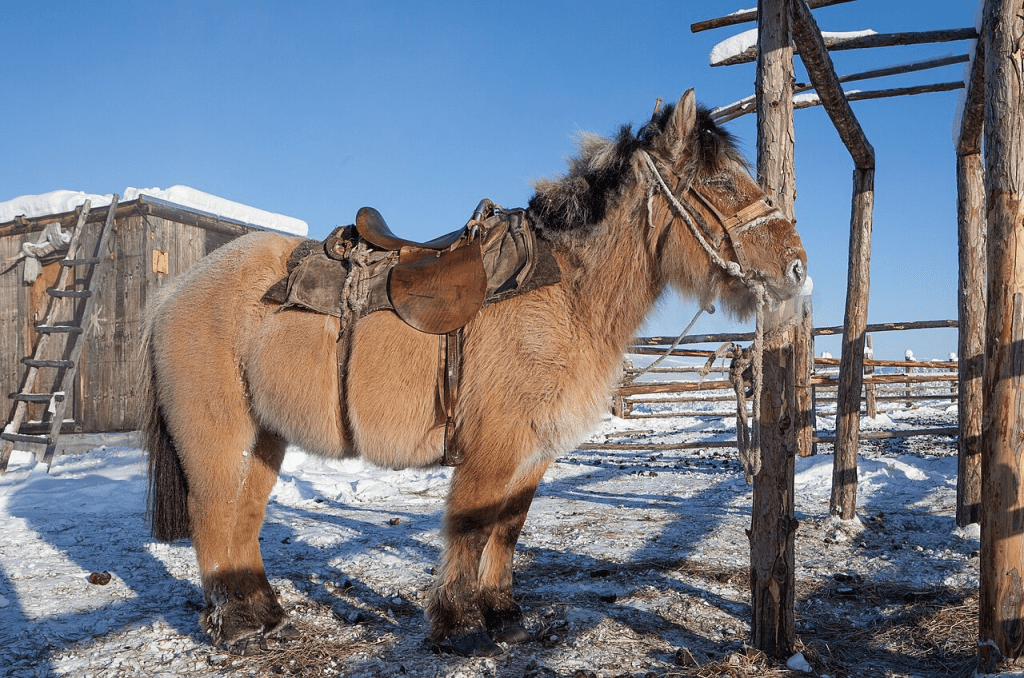
This is a Yakutian horse, a member of a breed of horse adapted for the subarctic environment, in a photo by Maarten Takens.
Our next modern story opens in 1988 in the Union of Soviet Socialist Republics, which was going through a period of dramatic change. While Michael Crichton was writing Jurassic Park in the United States, the Soviet premier since 1985 had been Mikhail Gorbachev, a reformer who believed that if the USSR was to survive, it needed to be far more open to dissenting political views and free speech and in the next year he would opt not to intervene as some of the Soviet Union’s former satellite states in Eastern Europe chose liberal democracy over communist dictatorship. Russian geophysicist Sergey Zimov had made a name for himself in studying permafrost and methane release from Arctic ground sequestration, monitoring from the Northeast Science Station, which he had founded in 1977, a research geological and ecological research facility near the Arctic coast of Russia’s Sakha Republic, an administrative division in northeastern Siberia. He had begun to wonder about the relationship between grassland animals and the preservation of the tundra grassland. So in the cold Arctic basin near the Kolyma River, he released 12 Yakutian horses to the area. (This breed of horses actually has its own interesting story. They are not descended from the prehistoric horses from the region, but rather from horses that were adopted from other domesticated horse populations by the indigenous Yakut people of what is now the Sakha Republic starting around the 1200s AD. Over a relatively rapid period of time, these horses evolved, probably by both natural and artificial selection, to have many Arctic adaptations such as woolly fur, short fat bodies that better preserve heat, and the ability to graze through snow effectively.) This experimentation had to be cut short though due to events thousands of kilometers away in Moscow; Soviet science was very much state-funded and the state was actively breaking down. In 1991, an aborted coup against Gorbachev shook the state to its core as economic malaise drove the country into chaos and newly free elections revealed deep-rooted demand for change among the population. Towards the end of the year, various Soviet constituent republics declared their independence until finally the Soviet flag descended on the Kremlin for the last time on December 26, 1991. The Sakha Republic was inherited by the new Russian Federation.
Zimov came back to the new government to seek support and in 1996 it was granted with the state giving 144 square kilometers to the project, which became an officially registered company. The name of this company, project, and location was, in reference to a popular movie from three years earlier, Pleistocene Park. Zimov wanted to do a proper experiment to see if grazing animals released within a controlled area would promote the expansion of grasses over other plants and aid in the retention of permafrost, sequestering of carbon, and increase in biological productivity. 50 hectares were fenced in so that the local animal populations could be controlled for the experiment. The first animals introduced were Yakutian horses, moose (Alces alces; you might see these called “elk” in some coverages of Pleistocene Park and that is because that is the term generally used in Eurasia for what North Americans call “moose,” which are not the same deer North Americans call “elk”), and reindeer (Rangifer tarandus; this is, yes, the Eurasian name for the same animal North Americans call “caribou”), all animals already found locally. Seeing some initial successes, a decade later the park expanded significantly with a new 2,000-hectare fenced area constructed between 2005 and 2006. In 2010, this expansion allowed for the transportation in of animals which had disappeared in the region. Musk oxen (Ovibus moschatus) are one type of animal which once inhabited Siberia and the mammoth steppe but which disappeared in the region in the last few thousand years, only surviving in the northern part of what are now Canada and Greenland, though reintroduction projects have seen success with them in many parts around the Arctic since 1900. A number of these have been introduced to Pleistocene Park from Wrangel Island (an Arctic island northeast of furthest Siberia, which is actually otherwise notable as the last place woolly mammoths survived about 4,000 years ago), which have over time shifted from feeding primarily on lichens to grass, which is more plentiful in the park now. The ancient steppe had herds of bison in species which have since gone extinct. To replicate this, park authorities first brought in wisent from near Moscow but a breeding population failed to be established so instead American bison are there now. Within the last decade, the park has also come to play host to a variety of domesticated animals including Kalmykian cows (an aurochs-like breed from near the Lake Baikal region), sheep, and goats. The sheep in particular require some keeper support but help to remove weeds. A species there I particularly like is Bactrian camels (Camelus bactrianus), which fill in some of the roles of extinct camels that once inhabited the steppe.
The exciting thing about Pleistocene Park is that the experiment has largely proven its foundational theory. As mosses are eaten up by grazers, they are replaced by grasses, which then increase the nutrient productivity that allows even more animals to graze and sequester more carbon while at it. Another effect, which is less straightforward to understand, is that grazing animals help to preserve permafrost in the area. The reason for this is that higher populations of grazing animals mean snow cover, which is often present in the subarctic (average temperature in January at the park is -33°C and in July 12°C), gets trampled down. Snow is actually a major insulator and prevents the cold air above from cooling the groundwater below, meaning that having animals clear it better preserves the ice underneath. One activity Pleistocene Park has actively carried out is the monitoring of this permafrost. A large network of tunnels more than 200 meters long was constructed at the park’s base camp between 2012 and 2016 and, aside from storage, it is used to monitor the rate of permafrost degradation, which despite having been successfully slowed in the park’s experimental conditions is still displaying long-term damage from the current global process of climate change. As the ice thaws, carbon dioxide comes out, adding more greenhouse gases to a warming atmosphere. Secondarily, as large amounts of organic matter which has been frozen for long periods of time becomes available to microbial decomposers in the soil, the decomposition process releases methane, which is a far more potent (but shorter-lasting) greenhouse gas than carbon dioxide.
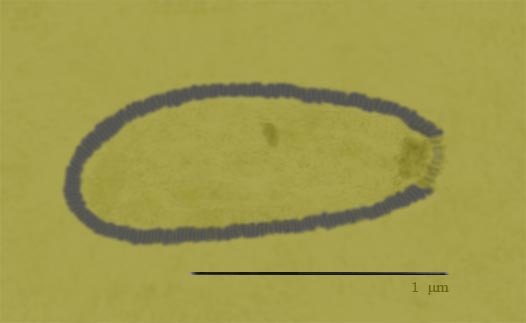
A microscope sketch of the majestic Alphapithovirus sibiricum by Wikipedia contributor Pavel Hrdlička.
Speaking of microbes, so far we have only discussed the de-extinction of animals and environmental reconstruction involving animals. Let’s talk about accidental de-extinction that is already happening: ancient viruses. When ancient animals like mammoths and recently the saber-toothed cat Homotherium are found in permafrost, they are very much not alive and while DNA can be recovered (more on that soon) from them, freezing living tissues actually ruptures the cellular microstructures that make life possible. This is far less a problem for much simpler biological entities, viruses, which the ice can actually help preserve. As climate change has been thawing permafrost, prehistoric viruses have already been emerging and recorded by science. Accidental de-extinction has a real risk of bringing ancient pathogens to life (although maybe “life” is the wrong word for viruses but that’s another issue). The first such virus to be rediscovered this way was Alphapithovirus sibericum, a DNA-based giant virus (or “girus”) measuring about 1.5 micrometers in length, making it one of the largest viruses ever discovered, which appeared in a 30,000-year-old segment of a permafrost ice core from Siberia in 2014. Samples of the virus were found to infect amoebae (this is a blanket term for single-celled eukaryotic organisms with a flexible shape), so it probably participated in the microbial environment of its day infecting one of the most common eukaryotic organism inhabiting the world’s soils: Acanthamoeba. Since then, scientists have identified various other viruses from permafrost which also prey on this readily available amoeba, some of which are otherwise extinct and some of which still exist elsewhere in our world. While these amoeba-hunting pathogens are not really a threat to us, we already have reason to believe that potential paleo-epidemics may be waiting in the thawing ice. Between just 1897 and 1925, around 1.5 million deer were killed by a series of anthrax outbreaks in northern Russia and the remains of many of these animals are still waiting in the permafrost. Likewise, in thousands of settlements in the region, farmers have long designated places to bury cattle which died from the disease to prevent their spread to others and to humans, but now these sites have become ticking time bombs. An outbreak in the Yamal Peninsula in 2016 which infected thousands of reindeer and even humans is thought to have been linked to a thawing reindeer corpse from the previous century. What will happen when the deeper layers from the Pleistocene thaw out more and more? Will ancient diseases from the carcasses of mammoths and woolly rhinos be unleashed on immune systems that have not dealt with them for tens of thousands of years?
Obviously, Pleistocene Park is not a de-extinction project in the way that a lot of the other things I am discussing here are. It does not purport to resurrect any organisms that no longer exist but instead reconstructs (albeit imperfectly) former ecological conditions. The relationship this has with de-extinction though is important, because the reality is that if an extinct animal were to be brought back and rewilded, its survival would depend on ecological conditions that may not still exist in this world today; in fact, the disappearance of such conditions is likely the reason for its extinction. (An interesting philosophical issue emerges here about our relationship with nature too: as our planet is thoroughly dominated by human activities now, increasingly even wild spaces are specifically designated or built by us. Even conservation becomes management rather than preservation. The strict distinction between natural and built environments remains a bit of an illusion. Perhaps moving forward, we will have to find ways to be comfortable with this for both our survival and that of the fellow inhabitants of our planet.) In popular discourse, the favorite animal to imagine a return for is probably the woolly mammoth (Mammuthus primigenius), an animal deeply dependent on the tundra steppe environment that Pleistocene Park is building. And Zimov himself has suggested that if the mammoths do make a return, the park might be a suitable trial location for them to make their first wild steps again.
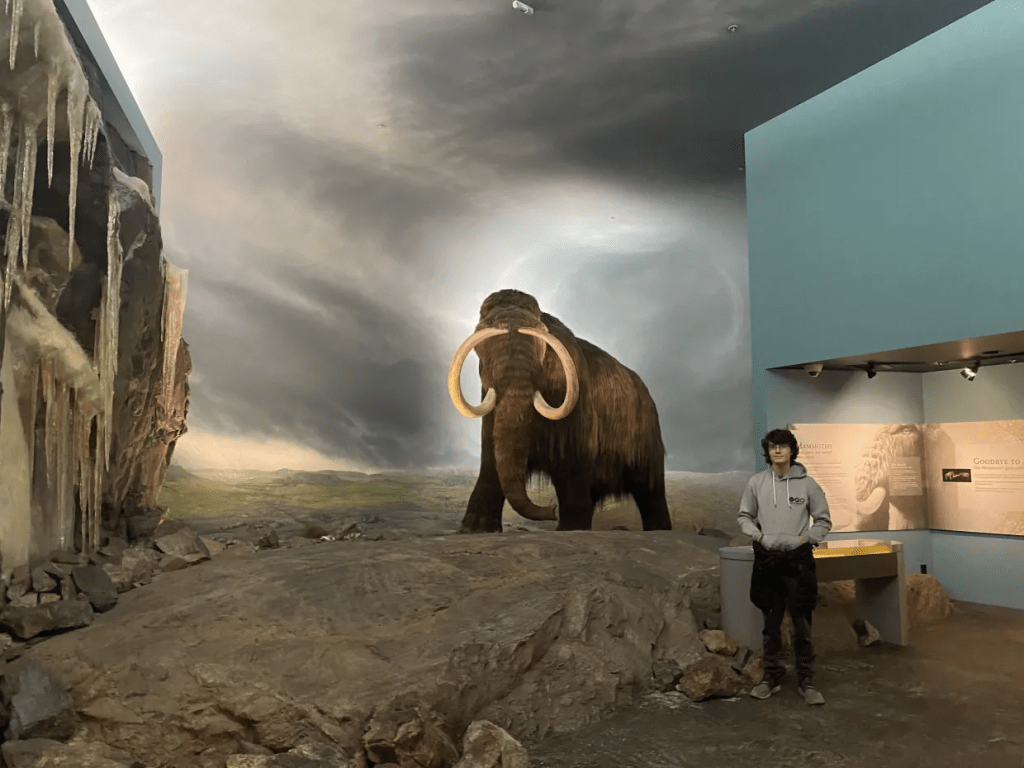
Me with the woolly mammoth statue at the Royal British Columbia Museum. I am truly in awe to be in the presence of the greatest of God’s creatures. I want one.
During the Pleistocene, there were many species of mammoths, elephants of the genus Mammuthus which were related to the modern Asian elephant, actually more so than either is to African elephants. The woolly mammoth was just one species of these which was extremely widely distributed in the steppe tundra environments that crossed the length of Eurasia and even extended across Beringia into subarctic North America. Assuming behavior similar to modern elephants, these mammoths’ females and young would have formed large cooperative herds while males wandered and looked for mates, sometimes battling each other in testosterone-fueled displays. With a combination of intensive human hunting and the aforementioned ecological cascade related to climate change, woolly mammoths went extinct on the mainland about 10,000 years ago but a final population existed on Wrangel Island off the northeast coast of Siberia until only 4,000 years ago (for the human-history fans keeping track at home, this is around the end of the Third Dynasty of Ur in Sumer or the start of the Middle Kingdom of Egypt) where they died off possibly prior to human arrival. Throughout human history since, the inhabitants of the mammoths’ former range have often known about their remains and the origins of the very word “mammoth” are unclear because it was already being used for tusks found in Siberia in the 1600s, presumably by way of indigenous people who had already been familiar with them before Russia’s eastward expansion. It was in a paper in 1796 by French biologist and “father of paleontology” Georges Cuvier that the concept of a species going extinct was first proposed in modern scientific literature. Woolly mammoths are almost uniquely tied to our cultural concept of extinction in that the biological concept of the matter was first defined to describe what had become of them. As such, for many they are the quintessential creature for which extinction can be conquered. As an animal which only lived a few thousand years ago and in environments where permafrost has existed consistently since then, woolly mammoths are fairly strong candidates for de-extinction in a lot of ways. We have their complete remains and know what they looked like pretty much entirely, including both their outsides and their entire internal anatomy. We have a bounty of genetic information from a large number of individuals, meaning it is even possible to do genetic diversity studies of mammoth populations. And we know a very high amount about the environments they lived in and what else lived there. As of writing this, efforts to revive the mammoth have not gotten very far but ambitious projects exist in Japan, South Korea, Russia, and the USA. We will explore some issues related to these later, but for now, here is the hypothetical process for bringing back the woolly mammoth as generally understood today.
Most scientists evolved in de-extinction believe that woolly mammoths will be cloned. In terms of biology, a clone is an individual which is produced with exactly the same DNA as another organism, in this case a dead mammoth. The daunting first task is organizational. Both nuclear and mitochondrial DNA (that is, the DNA found in both a cell’s nucleus and mitochondria, which are distinct) must be sequenced (which has been done) and compiled in full, not just as a list of A’s, C’s, G’s, and T’s on a computer but as physical material, separated into individual chromosomes (elephants have 56, compared to our 46), complete with telomeres, centrosomes, and all the other external and internal structure elements required for the DNA to undergo separation and replication in mitosis. Next, a mammoth’s sperm could be used to fertilize an Asian elephant egg cell where the mammoth DNA would be implanted. Alternatively and more probably, scientists can bypass the sperm altogether with a process called somatic cell nuclear transfer (this was the cloning method famously used in 1996 for Dolly the sheep, the first cloned mammal). In this situation, the nucleus of a body cell from a mammoth would be inserted into the fertilized egg cell of an Asian elephant and then implanted in a surrogate elephant mother, allowing her to undergo a pregnancy. It is technically easier, but also generally only has a success rate of between 1% and 5% in species where it’s tried, so unfortunately for our elephants, it may involve a lot of unsuccessful invasive procedures. Also with the latter, since it would mean having Asian elephant mitochondria in our new cells, there are many questions that may pose issues to the viability of the whole project, such as whether the mtDNA (mitochondrial DNA; sorry to those for whom high-school biology has become a blur) of an Asian elephant will be compatible with the genome of a woolly mammoth. If it is not, there will likely need to be another layer of biochemical engineering to solve these problems. The surrogate mothers would probably be impregnated by laparoscopy, which medical websites tell me is a procedure where a tiny camera tube is inserted into the female reproductive organs through an incision in the belly and which my needing to Google will probably lead to interesting ads for me for a while. Due to the physical strain on elephants (especially the high likelihood of some amount of partial-term miscarried pregnancies) and the fact that Asian elephants are themselves an endangered species, there are likely to be ethical issues raised should a project like this ever happen and I think that is important to keep in mind alongside the interesting science.
Aside from the technical difficulties of making a mammoth, rewilding them may be daunting. Elephants are extremely social animals and even seem to practice culture (that is, group-specific behavior passed on through social learning rather than genetics), meaning that a baby mammoth would probably need to be accepted by an elephant herd and learn from them. At the same time though, the environmental needs of a full woolly mammoth and an Asian elephant would be very different. It is likely that the first generation would need to be captive animals or at least very heavily monitored. Perhaps a closed-off but wide-ranging research environment like Pleistocene Park would have a role in this process. But some things are very clear. If the great animals such as the woolly mammoth are to come back to the wilds of subarctic Eurasia, the environment they lived in will need to make a return first. And, positively, not only is this concept being proven but it may help to relieve some of the strain of climate change at the same time. That is, if the permafrost doesn’t all melt before we take that opportunity.
Lying in Wait
Dating to around 385 million years ago in the Devonian Period, Runcaria heinzelinii is a transitional form between the early spore-producing vascular plants of the Silurian and the later seed-bearing plants that would explode in diversity not long after. The structure depicted here is a sporangium, the organ where spores are produced and stored, which in the case of Runcaria has developed a partially enclosed shape reminiscent of later seed pods. This drawing is by Wikimedia contributor Chiswick Chap.
Here’s an interesting question: how many organisms deemed extinct are actually resting somewhere dormant, their physical processes slowed to a standstill but still very much capable of being awakened? The answer, as it turns out, is many. So far we have almost exclusively focused on animals, which are by far the most charismatic organisms for us and the ones which de-extinction projects are usually proposed for in popular culture. But let’s take the time to look at another kingdom of life which has a natural history just as dynamic as that of animals: plants. Plants first conquered the land during the Silurian Period (about 443-420 million years ago), reproducing with spores and developing the first vascular systems that allowed them to grow upwards in a terrestrial environment in their eternal quest for sunlight. In doing this, they established the basis of the food web that would allow arthropods to also live on land and churned the ground to create what we now call soil. But it was in the following Devonian Period (about 419-359 million years ago) that plants innovated with the first seeds, which appear in the fossil record from around 370 million years ago onwards. Seeds are produced by seed plants as part of their sexual reproduction when the sperm carried by pollen reaches and fertilizes an ovule, the female organ. Seed structures vary dramatically but in general they have three basic parts: an embryo (which will grow into the new plant on germination), a seed coat (which performs a protective outer layer), and an endosperm (which is a supply of nutrients the seed can use when it first begins to germinate). The special capacity seeds have that other forms of reproduction often don’t is dormancy; seeds can remain still for a long time until external conditions dictate that they can germinate safely and effectively. Rather than actively moving like animals do, seeds therefore evolve to be carried or dropped through other means and are produced in great numbers so that at least some will find the proper environment to carry on the next generation. In the long run of evolutionary history though, this has also meant that plants often survive disasters well by just waiting them out, from pinecones that produce new growth after forest fires to the plants which survived the K-Pg mass extinction that killed the non-avian dinosaurs. And this is also something that is of interest to us in discussion of de-extinction.
This Judean date palm, nicknamed “Methuselah” after the biblical patriarch in the genealogy of Noah who is said to have lived for 969 years, in Ketura, Israel was germinated from a 2,000-year-old seed found in an archaeological excavation, resulting in the successful de-extinction of the particular plant variety. Photo by Wikimedia contributor DASonnenfeld.
Phoenix dactylifera, the date palm, was one of the first cultivated fruit trees in the ancient Near East. Between around 4700 and 4000 BC, as larger and larger settlements were constructed by the Ubaid culture (the archaeological term for the cultural assemblage that would soon develop into that of the Sumerians) and agriculture intensified in the fertile floodplains of Lower Mesopotamia near the Persian Gulf, date palms became a fixture of farmers there in time to be featured in early recorded history. In the Bronze Age, date cultivation became widespread both west and east: in the Indus Valley, the Harappan civilization took them deep into the Indian Subcontinent and in Egypt they were used to make fruit wine. Where dates went, they were bred into new distinct varieties. Of interest to us today is the Judean date palm, so named because of the Iron Age Kingdom of Judah and the classical-period description of the region named after it, Judea. It is unclear exactly when date cultivation began in the southern Levant, but considering how old it is in nearby Egypt, probably fairly early. In Exodus 3:17 (this book is composed in the 500s BC but with a story set much earlier) and elsewhere in the Torah, the reference to the Promised Land as “a land flowing with milk and honey” has been suggested by some Jewish scholars to refer to date honey rather than actual honey made by bees. Overall, dates are mentioned more than 50 times in the text of the Bible and ancient Jews seem to have considered them with high prestige, using their motifs to decorate the Second Temple in Jerusalem, putting their palms on coins, and using them to build sukkot during the holiday of… well… Sukkot. (While the genetic studies aren’t entirely clear, it has been suggested that Jews returning from the Babylonian exile of 587 to 539 BC brought elite date strains from Mesopotamia.) From the 400s BC onwards, a multitude of Greco-Roman writers tell us of the thriving date plantations especially around Jericho in the modern West Bank, the Dead Sea, and the Jordan Valley in the borderlands between what is now Israel, Jordan, and the West Bank. These references come via such notable names as Herodotus, Pliny the Elder, and Josephus. Under the Roman Empire, this particular variety was prized for its large size, sweetness, and especially lasting shelf life that allowed for export across the Roman world. Genetic studies on the remains of Judean date palms show the intricacies of the agricultural practice, where farmers actively and intelligently bred dates with desirable traits, sometimes admixing foreign male plants into the strain.
Throughout the Roman period, Judean date cultivation flourished. Then, between 634 and 638 AD, the rapid armies of the Rashidun Caliphate brought Islamic rule to the Levant. Dates were highly prized in the Arab Islamic world (in fact, it is said that Muhammad used dates to break his Ramadan fast in the evenings, a tradition which is emulated by Muslims today), though it seems that the agricultural centers for these fruits were primarily in different areas and the Judean date palms declined in cultivation. Several centuries later between 1099 and 1291, new invaders would secure a presence in the Holy Land in the form of the crusaders whose wars had significant effects on the economic practices of the region, including the destruction of most of the local date industry. As the Mamluk Sultanate consolidated control of the region in new Islamic hands centered in Egypt, a period of climate difficulties in the 1300s stressed agriculture. It is somewhat unclear if human activities dealt the final blow to the Judean date palm in the following period or if a scarcity of groundwater that the plants relied on did so. By the Ottoman Empire’s conquest of the region in the 1500s, visitors often noted that the region’s historical reputation for date cultivation did not match the relative scarcity of the fruits there, where they were now generally imported from elsewhere.
I got my masters degree in archaeology in Israel where I excavated and one thing I can confirm is archaeologists there love seeds (which in Israel actually mostly means olive pits, but we’ll still talk about dates today). The hard outer layers of seeds provide excellent protection of the organic material against external contaminants, making them excellent providers of potential radiocarbon dates for the settlement layers they’re found in. On top of this, they provide botanical data on both plants that were used and present in ancient settlements, which can be extrapolated into both economic and environmental information. As such, archaeological excavations, at least of agrarian cultures, sometimes end up producing impressive seed collections. Between 1967 and 1991, archaeological excavations were carried out at the Israeli site of Masada and the West Bank sites of Qumran, Wadi Makkukh, and Wadi Qelt, amassing hundreds of Judean date palm seeds. (A slight aside here but many academic journals today don’t publish finds from the Israeli-occupied West Bank as a rule to avoid legitimizing the situation. As such, it is pretty normal that most of the academic research on sites in this region happened before the Oslo Accords of 1993-1995, which did not exactly secure peace in the region.) Judean date palm seeds are significantly larger than both wild date palms and the modern breeds grown in the region. 32 of these were selected to be planted in a quarantine site at Ketura, a kibbutz (a sort of socialist farming community type pioneered by early Zionist settlers which continue to exist all over Israel today) located in the Negev Desert in southern Israel, to see if they would germinate.
And amazingly, in 2005, the first one, a specimen from Herod’s palace at Masada radiocarbon-dated to between 155 BC and 64 AD, did. Named Methuselah after an extraordinarily long-lived ancestor of Noah mentioned in Genesis 5:27, this specimen of the Judean date palm still grows today at that kibbutz, being the world’s first scientifically documented de-extinct plant. Six others at the kibbutz also sprouted and were given biblical names: Hannah, Adam, Judith, Boaz, Jonah, and Uriel. The various seeds range in possible dates from between the 300s BC and 100s AD, though the researchers note in their paper that the carbon dates had to be recalibrated from initial measurements to get there because since the seeds were still living, albeit in stasis, they were in fact taking in a trace amount of external carbon that was making them appear several centuries younger than they were based on archaeological context. One very cool thing about these de-extinct trees is that since they came to us today directly from ancient parent trees, the DNA that now exists in every one of their cells from roots to fruit carries actual information about the genetic pool of ancient Judean date palms. It is because of this wealth of information that researchers have been able to identify admixture of foreign strains into the ancient variety for instance, showing that farmers were importing and cross-breeding with foreign plants, perhaps deliberately for traits they wanted. This detail research from these 100% pure revived specimens is not the sort of thing we’d get about non-avian dinosaurs by making a Chickenosaurus for instance. So it’s extremely cool in a different way.
This diagram comes from Köhler’s Medicinal Plants, a botanical guide published in 1887 by German physician Hermann Adolph Köhler. It displays the plant Commiphora myrrha, one of several members of the genus which produces the oily resin known as myrrh.
Following up these successes, the Israeli researchers decided to keep going, this time with a mystery seed from Wadi al-Makkukh in the West Bank between 1986 and 1987, which radiocarbon analysis has dated to between 993 and 1202 AD. About 1.8 centimeters long, the seed was planted in 2010 in a greenhouse of the Arava Institute for Environmental Studies in Ketura. Five weeks later, it germinated, eventually growing into a 3-meter-tall plant with a peeling bark. It was identified as a member of the genus Commiphora, but unfortunately since its germination, the plant has never flowered, denying the scientists observation of the reproductive organs that are often treated as diagnostic for the over 180 species in this genus. However, the researchers believe that it may be an extinct variety which has not yet been scientifically documented. Commiphora is probably most familiar to the general public as being the source (from several of its species) of a resin called myrrh, a word which comes out of the Semitic languages. When certain members of this genus are cut on the stems or branches, the resin leaks out and coagulates into a material that can be collected and which is rich in essential oils. Myrrh is amazingly multi-use, featuring in medicine (where it is both anti-inflammatory and pain-relieving), for perfume and incense (all three major Abrahamic faiths have traditions of its use this way), and also as a balm (such as on ancient Egyptian mummies, along with natron). The plant is natively found throughout the Arabian Peninsula and northeastern Africa and in the ancient world the resin was the subject of international trade and exchange. Multiple times the Hebrew Bible includes reference to a rare perfume known as the balm of Gilead, named after a region in what is now northwestern Jordan. Most scholars believe this balm was a type of myrrh and it is referred to in ancient texts, both biblical and Greco-Roman, as a major high-value export of the region. (The specimen grown from the ancient seed at Ketura was, like the date saplings, given a biblical name, this time Sheba in reference to the Queen of Sheba giving King Soloman balm of Gilead in 1 Kings 1:1.) Considering the production of this balm in the region stops being mentioned in the historical record in the 800s AD and there are no native Commiphora species there today, the researchers have suggested that their ancient plant may in fact be the lost balm of Gilead. If they are correct, then yet another ancient regional plant variety from the Bible has already been de-extincted.
An 1887 illustration of a Montreal melon from the Boston Public Library.
Aside from archaeological excavations, another source of plant seeds for de-extinction is seed banks. Montreal is the largest city of Quebec, a largely Francophone province of Canada with many unique aspects to culture and identity. In the late 1800s, farmers in the area around Montreal (actually today many of these farmlands are covered by the much-expanded city) developed a truly impressive breed of melon (Cucumis melo) which became known as, well, the Montreal melon. The climate of the region is harsh on melons and so growing them was actually extremely difficult but the result was the world’s most prestigious breed of the fruit. Some were weighed up at 25 pounds (which in modern Canadian terms is now a bit over 11 kilograms) and slices of the fruit could sell in Manhattan for the modern equivalent of about 30 dollars, making them fine dining. They tasted somewhere between cantaloupe and honeydew and every year one would be sent to Queen Victoria for her to enjoy. Despite the size, flavor, and reputation, these melons were actually rather work-intensive and risky projects to cultivate as they had to be planted early in the season, be lifted off the ground, and receive the right weather conditions that may or may not come. Montreal was a hub for Canadian horse-racing and the large number of horses and voluminous manure they produced was used to grow the melons, but gradually as the city expanded, farmland and manure decreased. More and more farmers decided that growing the difficult crops was not worth the effort and so they declined. It’s somewhat unclear exactly when it disappeared but sometime in the early 1900s, the last farms (which were mostly family farms and private affairs rather than business, considering the plant’s profitability issues) stopped growing them. Following a local revival of heritage interest in the melons in the 1990s, one resident of Montreal, a poet and journalist named Mark Abley, managed to track down seeds of the melons stored in a seed bank in Ames, Iowa in the USA. The melon was revived in 1996 by a group of Trappist monks in the nearby town of Oka who specialized in teaching agricultural practices. Today, it is once again possible to get the melons, albeit with some differences created by the genetic bottleneck of bringing them back with only a few seeds. A similar story exists with the York groundsel (Senecio eboracensis), a type of wild daisy which once existed in part of England but declined and disappeared after 1991, largely due to excessive presence of weedkillers, a common environmental pollutant. Seed banks preserved representatives of the plant, which was reintroduced to the wild in 2023, making it the first extinct species to ever be intentionally revived and rewilded.

The Svalbard Global Seed Vault has to be one of the coolest sci-fi-looking buildings out there. This photo was taken by Michael Major on behalf of the German non-profit organization Crop Trust, which co-runs the facility, and put on Flickr.
Storing seeds and planting them later is clearly an extremely demonstrated method of plant de-extinction, at least so long as the seeds have been stored or are found. This concept has actually been taken further. According to an article from 2018, there are around 1,750 genebanks in the world. Genebanks are facilities designed to collect and store the genetic information of organisms for the purposes of research as well as for future generations to have access to. Despite how high-tech this sounds, for plants, nature’s genius invention of the seed seems to be better at long storage of this information than any of our other systems, especially when kept at low temperatures. This is the working premise of the largest genebank on Earth, the Svalbard Global Seed Vault, located as its name suggests on the Norwegian island of Svalbard in the Arctic Ocean. With a capacity of around 4.5 million seed samples, the vault, which was opened in 2008, keeps its treasures in caverns at the end of a 100-meter tunnel, using the Arctic permafrost as a natural refrigerator. According to the facility’s website as of my writing this in 2025, the vault contains 1,331,458 seed samples from 123 different depositors, in total preserving 6,297 species. While the government of Norway co-runs the vault, it is given an incredible amount of international recognition and national governments and private organizations have sent in seeds from all over the world. The future is hard to see and the continuity of our agriculture is not guaranteed. Perhaps at the end of the day, preparation is a very good day. Maybe, should the human future involve things getting a lot worse for us, the de-extinction of plants from frozen seeds will be the secret to rebuilding our food supplies in the aftermath.
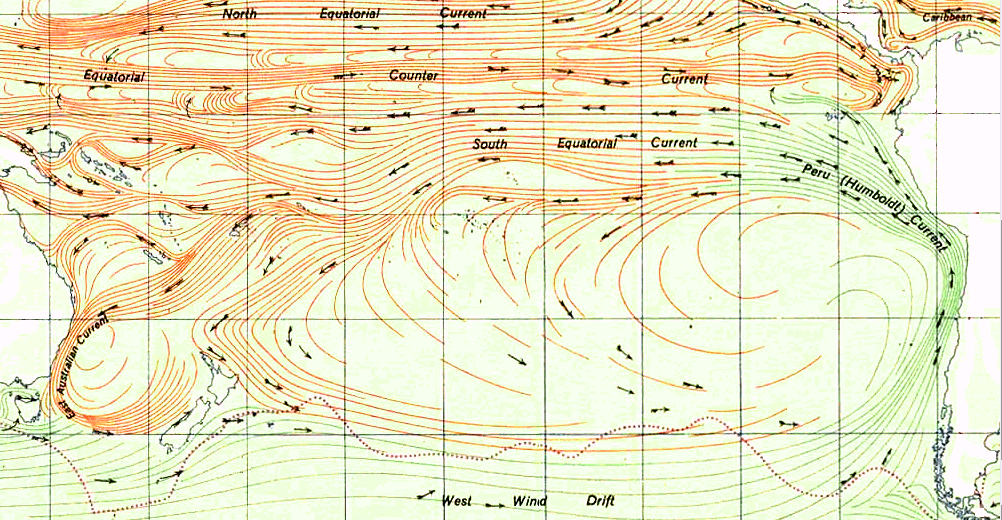
A map of the South Pacific Gyre from a 1943 map of the Earth’s ocean currents from the US Army.
Before I finish this section, I want to actually turn away from seeds. Clearly life is able in some cases to preserve itself in stasis for long periods of time until external conditions are amenable to survival. But how long are organisms able to do this? What is the greatest age at which science has ever recorded itself reawakening something from stasis. As far as I can find, it could be as high as 101.5 million years. The most hardy organisms on our planet are all microbes for one simple reason: simpler smaller structures have less necessary parts which can be damaged. Bacteria can often just cease activity if buried in an environment without access to resources and have their biochemistry kick them to life down the road later. The South Pacific Gyre is a region of counterclockwise-moving circular currents in the South Pacific Ocean between Australia and South America which, by the whims of the currents, happens to form one of the ocean’s great ecological resource deserts at its center, being comparatively devoid of living organisms. In 2020, Japanese marine biologists who had taken samples from the seabed there reported that extremely old sediments could be extracted and incubated to reveal surprising reemergence of biological activity. Curiously, it was aerobic organisms, those that made use of oxygen, which reemerged most effectively and even increased in number afterwards while anaerobic ones largely died. Perhaps a lack of oxygen made them dormant while its reintroduction stirred them to life. Astoundingly, the oldest of these samples was dated to around 101.5 million years ago, just at the end of the Early Cretaceous Period, taken from around 75 meters below the modern seafloor. In recent decades, the insides of the crust of our own planet have been discovered to be full of small but diverse organisms, some living as deep as 21 kilometers below sea level, although this arena, the “deep biosphere,” remains fairly mysterious. What other sleeping organisms await in it? What about under the sterilized surfaces of worlds like Mars? Perhaps in some places we may venture in our future, de-extinction is merely a matter of digging.
The First De-Extinct Animal
A fair criticism of everything I’ve written about far is that it can feel like a lot of nothing. If your exposure to the topic in the past was Jurassic Park and discourse about the mammoths, well, at least I’ve touched on the ideas of those things but for the most part we’ve talked about back-breeding, seed-finding, environmental modeling, and other things that might fairly feel like… well… cheating. A seed that can germinate was never technically dead in the first place. An animal bred to look like an extinct relative does not become that relative on any deep level or according to any scientific taxonomy. A reconstructed environment is just a different thing from de-extinction, right? Jacob, why did you touch on that at such length? Thus far, one thing that I hope has been made clear is that de-extinction isn’t actually a scientific field. It is deeply and essentially tied with science of course, but it’s primarily a social phenomenon. The methods that have been done, attempted, or imagined to bring back different organisms are often completely different from one another, use different criteria for assessing what a de-extinct organism is, and have different goals with whatever is produced. All that unites them is the aspect of the human mindset that longs for organisms that have disappeared for whatever ideological reason. But that is worth studying so that we can think about why we do it and where these projects rest in relation to society. I hope that thus far, some of these projects have been unsettling and some inspiring. The only way to do this topic justice is to allow it to be morally complicated. So… then… have any extinct organisms, actual genetic copies of extinct organisms, been recreated by science? Yes. Let us now discuss this.
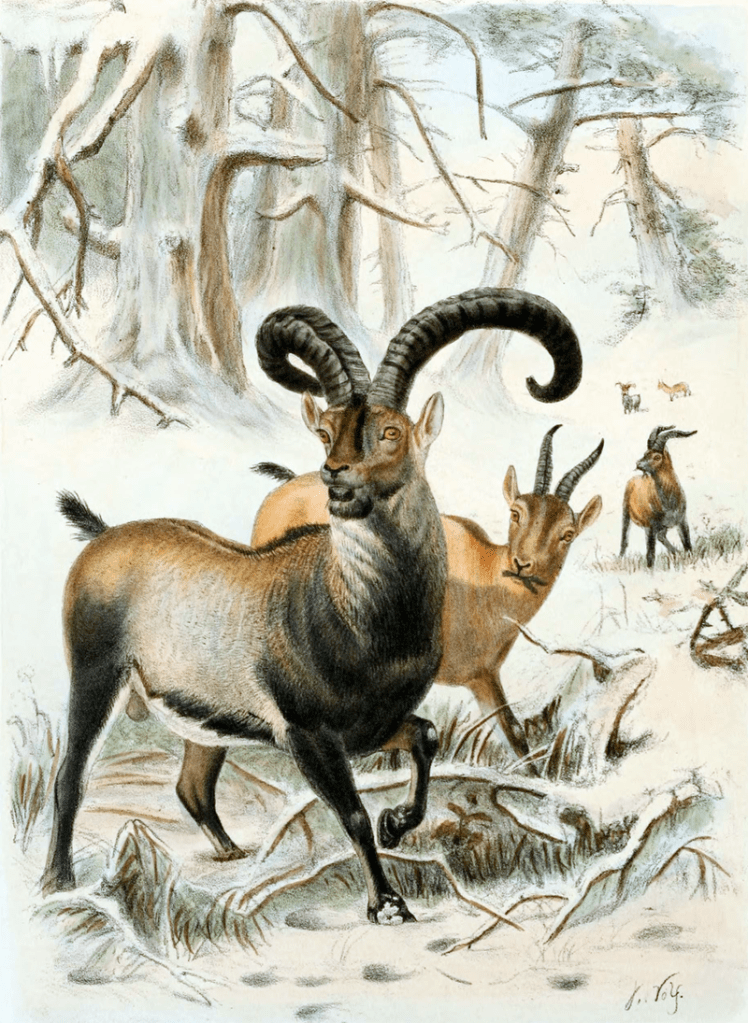
An 1898 illustration of the Pyrenean ibex (Capra pyrenaica pyrenaica) by Joseph Wolf for Richard Lydekker’s book “Wild Oxen, Sheep, and Goats of All Lands, Living and Extinct.” Since that publication, the Pyrenean ibex has gone extinct twice.
“Ibex” is an arbitrary general term for some but not all of the member species of genus Capra (the goats), including 7 of 10 of the extant species. One of these is the Iberian ibex (Capra pyrenaica), which includes the subspecies known as the Pyrenean ibex (Capra pyrenaica pyrenaica), which until fairly recently inhabited the Pyrenees Mountains which sit on the borderland between Spain, France, and little Andorra. Like many animals in our modern world, the once-common Pyrenean ibex spent much of recent history taking on damage from human activities as they were overhunted and faced fierce competition for territory with domesticated grazers whom farmers prioritized their land being used for. In the 1990s, populations were seriously dwindling. The term used for the last member of a species or subspecies is “endling” and the Pyrenean ibex endling, Celia, captured in 1999 in Spain’s National Ordesa Park, was given a biopsy to collect skin cells by a multinational team of Spanish, French, and Belgian researchers. Unfortunately, Celia died rather anticlimactically the next year in captivity thanks to a falling tree. Rough end for a subspecies.
Using somatic cell nuclear transfer (remember this procedure from when we discussed the concept of mammoth de-extinction?), Celia’s genome was put into several fertilized eggs in 2003. These were implanted into a number of living female Iberian ibexes of other subspecies and crossbreeds between Iberian ibexes and domestic goats. Three pregnancies occurred, two of which miscarried. The third, in July of that year, led to a birth from one of the hybrid mothers. The baby became the first animal to truly be brought back from extinction by cloning, the first “de-extinct” animal that could be recognized as a true representative of the extinct taxon by the standards of biology, a little female, just like Celia had been. Unfortunately, she was not well and struggled to breathe. Her life only lasted a few minutes. An autopsy afterwards found the cause: she suffered from severe malformation in the left lung, which had an extra lobe and was in a state of atelectasis, what we usually call a collapsed lung. Minutes after the Pyrenean ibex became the first truly de-extincted animal, it broke the record for number of times an animal has gone extinct at 2. Scientific results on all of this were only published 5 years later in 2009. Genetic analysis of both nuclear and mitochondrial DNA demonstrated that the baby had been an identical clone of Celia.
The process is vindicated. We can in fact technologically bring back extinct animals. It has been done. It will likely occur again. But the fact that it’s been done has raised discussions of what that actually entails. Even with very closely related living surrogates, the success rate of somatic cell nuclear transfer and viable pregnancies that follow is low. This means that carrying out the procedure is actually very expensive and requires operation at scale. From an ethics standpoint, it is also relevant that it requires putting a large number of potential surrogates through medical procedures, some of which are likely to have failed pregnancies because of it. If the surrogate is an animal with a limited or already endangered population, this might be actively risky to the species, especially as it essentially takes those animals out of the conventional breeding pool for a time. If a birth is successful, developmental difficulties resulting from trying to force the clone and surrogate to be compatible may mean the resulting animal has a disabled or short existence. To produce anything close to a breeding population, a diverse source gene pool is required and the entire process needs to be repeated until there are enough resulting healthy surviving individuals to create a wild community that won’t suffer the effects of inbreeding in a severe way.
The first successful animal de-extinction recognized by biologists at large did not make as huge of a cultural splash as Nazi state-sponsored cattle-breeding, a popular paleontologist’s dream of dinosaur movies becoming real, or the constantly present discussion of seeing the mammoth again. But that’s probably because most of us don’t appreciate wild goats as flashy animals. And it’s more intoxicating to imagine creatures coming back than to think about the idea that this process might have consequences… well… aside from the plots of Jurassic Park‘s now extensive franchise. In Michael Crichton’s initial novel, the various characters are split on whether or not bringing back the animals is a good goal and, likewise, tempering voices followed the Pyrenean ibex news, even as it proved the technology. Unless that technology improves immensely, the current way we are able to do it is extremely demanding on budgets, animals, and scientists. In a world where human activities wipe out dozens of species daily, years devoted to getting one or a few individuals from one species is hardly a real environmental boon. And, as mentioned with the demand on surrogates, it might be actively hurtful.
There’s a lot of organisms I would like to see return to this world. Most of my very favorite animals are extinct. But I am of the opinion that beelining for that is not a solution to our problems. That is not to say that I think the scientists who find methods of doing it are doing the wrong thing. But I do think the discussion of why we want this as a society is important to have. That brings us to the last section for today.
Corporate Distraction
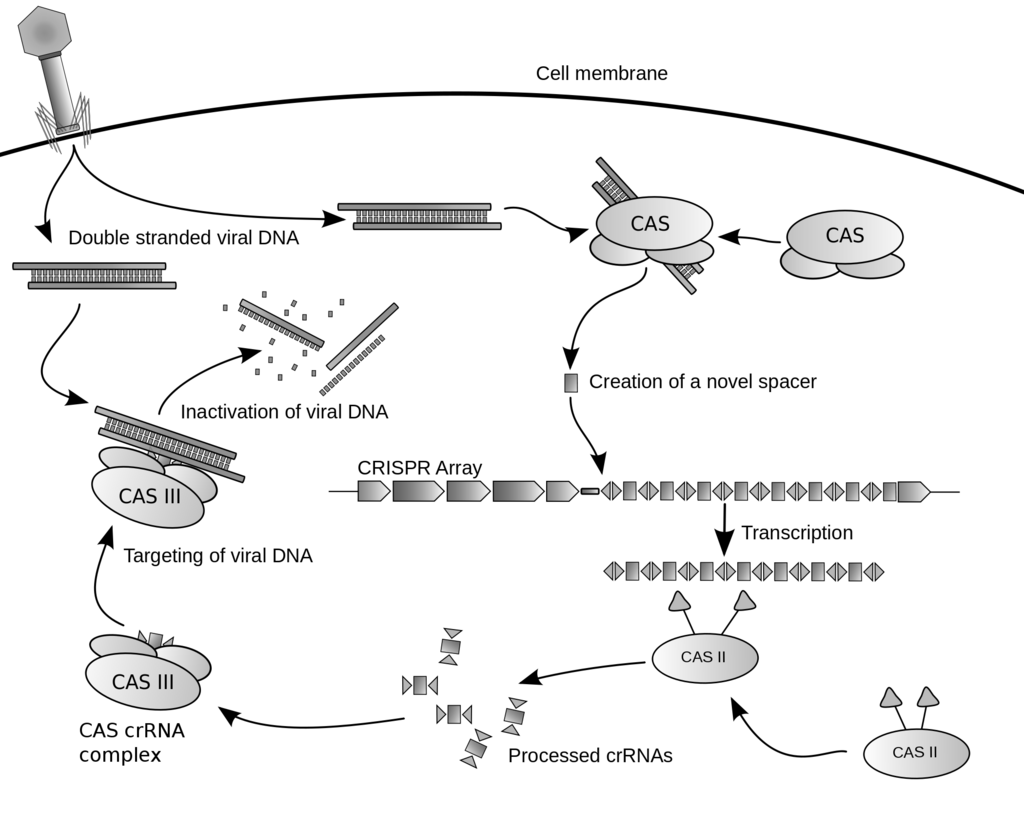
This diagram of the CRISPR mechanism in bacteria by Wikimedia contributor James Atmos might make sense if you’re smarter than me and are better at biochemistry. In brief, the DNA of an invading virus is fed through a Cas9 enzyme which inserts it into an array in its own genome that then can be used to target and destroy further instances of that genome, helping to defend the bacterium from the viruses.
Most likely if you hear of genetic engineering in the modern world, you’re hearing about an application of something called CRISPR, which stands for “clustered regularly interspaced short palindromic repeats,” and an enzyme called Cas9. The most numerous group of organisms by far on the planet is that of bacteria, single-celled organisms in innumerable species which cannot exactly have multiple specialized body cells like in more complex organisms. Preying on bacteria are even more numerous (but technically not living) bacteriophages, miniscule viruses which attach to the outside of a bacterium and inject their genetic material, which then forces the bacterium to produce many copies of the bacteriophages before killing itself and spreading the new viruses into its surroundings. It is unknown exactly how long this war has been going on but it may be one of the oldest lasting biological relationships on the planet, going back to around the origin of life about 4.1 billion years ago. Evolution has not sat idle and bacteria have developed their own sorts of immune defenses in the small space allowed by a single prokaryotic (having no nucleus) cell. In many bacteria, when a bacteriophage injects its genome through the cell membrane, an enzyme called Cas9 has a chance of catching onto the viral DNA and processing it. Cas9 then attaches a specialized gene to the ends of the viral DNA which marks it as a foreign element and neutralizes it. This strand, referred to as CRISPR, is then added to the bacterial genome like a database, from which it can program other Cas9 enzymes to attack and destroy instances of the viral DNA if it gets injected into the cell again. It is like a simple version of an adaptive immune response in animals like us.
CRISPR was first noticed by Japanese researchers at Osaka University in 1987 when studying the genome of bacterium Escherichia coli (you’ve heard of E. coli; this is the one). They did not understand the nature of the genes but researchers in many countries over the course of the next decade observed that the genome would repeat in short and regularly spaced ways. The terminology of “CRISPR” was proposed in 2001 and the next year it became understood that it represented transcribed genetic information from other sources. In 2005, discoveries in both university science and, of all things, the yogurt industry, emerged to connect CRISPR to bacterial defense against bacteriophages. In 2012, American professor Jennifer Doudna and French professor Emmanuelle Charpentier published on the potential use of the CRISPR-Cas9 system for programmed targeted gene-editing. They also filed a patent application for this technology, sparking a legal debate that went on for several years as to whether a system like this could even be eligible for patent rights. I elect not to get into this because while I think I can teach myself something about microbiology, law is far too complex. But it is important to note that from the earliest existence of CRISPR gene-editing, now over a decade ago, it has been subject to monetization and politics.
You already live in a world that has been transformed by CRISPR gene editing, easily one of the most impactful emerging technologies in our world. The easiest place to see this is in genetically modified crops, which now form a significant portion of the global food supply. GM crops, while often politically controversial due in part to the mistaken perception that “unnatural” equals less healthy (despite domesticated plants being already thoroughly shaped by humans), have had immense positive benefits for humanity. Plants have been given natural pest and disease resistance that greatly reduces the toxic pesticides farmers often otherwise use that go into the food supply and into environmental runoff. Edits aiding efficiency and for traits like frost resistance increase the yield that farms can produce, reducing the need for more land area and providing some protection against devastating crop failures. Genetic engineering of crops did not begin with CRISPR (earlier methods from as early as 1987 used what was called a gene gun, which literally shot smells with microscopic metal projectiles attached to the DNA scientists wanted to insert) but it did become much cheaper, more precise, and far more widespread. Most grounded criticisms of GMO crops are not really about the science itself but about the conglomerate corporations that have used patented plants to extend their control over the food supplies of countries like the US. Another notable use is that if you have diabetes and take insulin, you are most likely taking insulin that was produced by genetically modified bacterial cultures to produce it. Recently, CRISPR has received attention for its emerging uses in addressing human genetic diseases through what’s called gene therapy and it may have applications in the fight against cancer. In 2018, Chinese biophysicist He Jiankui announced that he had carried out the first gene-editing of successfully born human babies, attempting to give genetic resistance to HIV to three babies whose father had been HIV-positive. This violated both Chinese law and scientific ethical boundaries, which are currently generally uncomfortable with the genetic engineering of humans, leading to a revocation of He’s ability to practice medicine and widespread rejection of his publications in academic journals. Nonetheless, we now live in a world where human gene-editing is possible and while society at large worries about its potential biological and social side-effects, some like He argue it is simply the next step in protecting humans from diseases that can be conquered.

The logo of Colossal Biosciences.
In the story of de-extinction, no other company has gathered quite the attention as a corporate player in the arena quite like Colossal Biosciences, an American biotechnology company founded as recently as 2021, which is currently headquartered in Dallas, Texas. The prime mover behind the company has been George Church, a professor of genetics at both Harvard and MIT, who has been considered for years to be an influential figure in both the science and business worlds of biopharma, rubbing shoulders with members of the technological elite such as Elon Musk. Church had had a long-running interest in the concept of revival of the woolly mammoth and in 2015 he and his team at Harvard had used CRISPR to insert parts of the mammoth genome into skin cells from an Asian elephant, but he wanted to do more. In order to get the money moving, he teamed up with Ben Lamm, a serial entrepreneur and billionaire who’d had previous success with technology startups related to things like mobile app design, chatbots, and artificial intelligence (yes, sorry, unfortunately the AI bros are involved in this story). At launch the company received $15,000,000 from various investors that included a variety of colorful capitalists including the Winklevoss twins (hey, look, the Bitcoin bros showed up too). Investors hoped that Colossal Biosciences could clone the woolly mammoth. And while we’re at it, since I’m going to be hard on Colossal a lot here, it’s worth pointing out they also wanted to do work on combatting the spread of elephant endotheliotropic herpesvirus (EEHV), one of the biggest threats to elephants today in both Africa and Asia, aside from humans of course. This project is still proudly advertised on their website and I hope genuinely they find success in it.

Vow’s promotional image of the mammoth meatball. Photo by Studio Aico.
Colossal is not the only young upstart company interested in mammoths. Vow is an Australian company founded in 2019 which specializes in culturing meat, that is, taking animal cells and growing tissues in a lab in a way that does not require killing those animals. The idea is that since animal farming is so destructive to the environment and the factory farming system so deeply abusive to animals, culturing meats might be a more sustainable and ethical way to continue allowing people to eat meat. In 2023, the company announced the creation of a “mammoth meatball.” The meatball was a mix of lamb, African elephant, and woolly mammoth, all cultured in a lab. Cultured meats hadn’t cleared regulatory hurdles in Australia to be sold for consumption yet and so this was all publicity stunt, but it got in the news and brought the company all sorts of attention and, importantly, investors. According to an article by The Guardian, one of Vow’s cofounders said, “We chose the woolly mammoth because it’s a symbol of diversity loss and a symbol of climate change.” As of my writing of this article, the only country which Vow has currently made their products available in is Singapore, where their flagship product is Forged Parfait, made with cultured cells from the Japanese quail (Coturnix japonica), classified as near threatened by the IUCN but importantly that doesn’t really matter for the sake of this project since none need to be killed to make this meat. However, now that the proof of concept exists, perhaps more cultured meat is in our future… and it’s not necessarily that much more difficult to carry this out with an extinct species as long as the available genetic material exists. Make of that what you will in relation to the de-extinction topic but also let’s note that there is a good chance you first heard about this company in relation to the mammoth meatball, very much not the main product they’re actually pushing onto dinner plates, so demonstrably attaching bioscience development to the topic of de-extinction gives it more media mileage.
An official image from Colossal Biosciences of their “woolly mouse,” a breed of house mouse (Mus musculus), modified to replicate the wooliness of a woolly mammoth.
Back to Colossal’s mammoth project meanwhile. Differing from the somatic-cell-nuclear-transfer method discussed earlier in this article for the de-extinction of the woolly mammoth, colossal has favored the use of CRISPR to adapt the genome of an Asian elephant to have traits similar to the woolly mammoth. In early 2025, just a few months ago as of my writing this, they announced a breakthrough with their creation of woolly mice, genetically modified individuals of the house mouse (Mus musculus). Colossal’s researchers had analyzed the DNA of the Asian elephant and the woolly mammoth to identify traits they considered “key” to the extinct animal. Focusing especially on wool, they wanted to test if they could replicate this in another animal and went with lab mice. Mice are very well-studied as laboratory animals, far more plentiful than elephants, and have pregnancy periods of just 18 to 21 days so they provide a good test subject. The genomes had been edited in 8 places and the team successfully produced 32 mice which remarkably all showed the traits successfully and without negative side effects. While mice are obviously not elephants (I mean, I hope we don’t need that discussion, dear reader), Colossal has considered the experiment crucial as a proof of concept for putting these same traits into a reconstructed mammoth. Plenty of scientists responded with a type of criticism you probably expect at this point, however: simply editing an Asian elephant for key characteristics considered “defining” to a mammoth sort of misses the fact that mammoths were not just hairy versions of our modern elephants. They were an entirely different genus of animals with far more genetic divergence from Asian elephants than Colossal’s methods would produce. If Colossal succeeds in producing their mammoth-reminiscent elephant, which they project they can do sometime around 2027, it will almost certainly not be recognized by science as part of Mammuthus primigenius. The young would have to be raised and taught to live how mammoths do but how would that happen? And how could we possibly know if the resulting behavior will be an accurate recreation of things in the Pleistocene? The methodology is undoubtedly scientifically cool but from a technical standpoint, we must remember it’s not too different, aside from the technological tools aiding it, from what the Heck brothers did regarding the aurochs: subjective replication rather than resurrection. What results will be something new. Two other extinct animals that Colossal has designated projects for are the dodo (Raphus cucullatus) and the thylacine (Thylacinus cynocephalus, which I also have another full article about).
Jacob here from the future on January 16, 2026 with an edit. I'm using a different kind of text because I've never done a post-facto insert like this and we need something new and fresh. A kindly Reddit user, u/throwawayted12, brought to my attention that I've likely oversold the pertinence of Colossal's woolly mice to actual mammoth concept proofs. In fact, it seems like there was little seriously novel science here at all in what was effectively a publicity stunt. Please see the Bluesky thread here from University of Sheffield paleontologist Tori Herridge ( https://bsky.app/profile/toriherridge.bsky.social/post/3ljrnwwj4pc25 ) where she demonstrates that the mice used, a breed known as Japanese fancy mice, are actually very well-studied subjects of gene-editing and that the genes required to make woolly ones are already pretty well-established. No direct reference to a mammoth genome is required to figure this out.

A comparison of the skeletons of the grey wolf on the left and the dire wolf on the right with images contributed by Wikimedia users Mariomassone and Momotarou2012.
Before we get to Colossal’s most famous project, let’s take a moment to talk about the extinct dire wolf (Aenocyon dirus). Dire wolves were a type of prehistoric canids which lived in North America in the Pleistocene and until about 10,000 years ago, when they disappeared during a period of multiple megafauna extinctions aligning with the end of the last glacial phase, but which a debate over the relative importance of human activity and climate change still rages over. (If you are interested in this, I have an article about the extinction of the North American megafauna on this blog as well.) Dire wolves were extremely prolific predators, inhabiting plains and grassland environments in the temperate and tropical regions of North and South America. Despite the name, they were not true wolves (and about as close to wolves as to any other living canid, such as African wild dogs) and a 2021 genetic study confirmed they were the last survivors of an extinct lineage of canids local to the Americas. It seems the last common ancestor between them and modern wolves was around 6 million years ago, just slightly more recently than that of humans and chimpanzees. Weighing generally between 60 and 68 kilograms, they tended larger than grey wolves and had stronger bite forces; they possibly specialized in hunting the large animals they shared the Pleistocene world with.
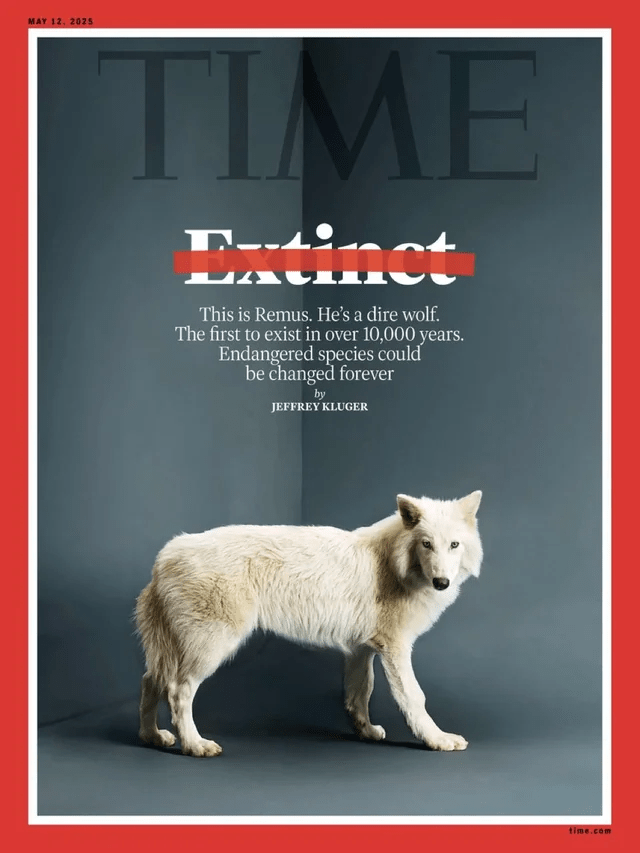
A 2025 Time magazine article featuring the Colossal Biosciences Dire Wolf Project on the front cover, touting it, inaccurately, as the source of the first de-extinct dire wolf.
Not long after their woolly mice announcement, Colossal announced something even more dramatic: the de-extinction of the dire wolf. A Time magazine cover displayed one of their animals and announced it as the first dire wolf in over 10,000 years. Immediately, Colossal flooded internet spaces with promotional videos of the wolves and content about them. There are three such wolves. The first two, a couple of males born on October 1, 2024, were named Romulus and Remus after the two brothers who supposedly founded Rome in Roman mythology and who were suckled by a she-wolf as a baby. The third, a female born on January 30, 2025, was named Khaleesi after a title held by Daenerys Targaryen, who I guess is a character from A Game of Thrones (remember that one). The pups were all raised in secret until the announcement in April. The media storm was immediate with most major news platforms declaring it a successful de-extinction and often the first (ignoring of course the history of past things such as seeds and the Pyrenean ibex). The technological achievement was quite impressive: an application of multiplex CRISPR technology, that is the successful use of CRISPR to edit multiple genes at the same time, minimizing the damage of multiple procedures to a cell while also bringing about more than one targeted change. 14 genes were edited in total into grey wolves (Canis lupus) to better resemble a dire wolf (many of which were based on genes within the dire wolf genome while others were not found in the dire wolf genome but were considered similar while avoiding certain potential side-effects). These traits include a larger size, modifications to the skull shape, larger leg muscles, and notably a white fur coat. The videos of the puppies are, for the record, quite cute and now the growing animals are very big and pretty.
But of course, 14 gene changes does not a species change make and it certainly does not put the pups anywhere close to a dire wolf. The scientific consensus has responded pretty clearly on that, saying that the dire wolf cannot be considered to be extinct and the wolves created by Colossal are still easily within Canis lupus, albeit with novel variation. Probably the most important response came from the International Union for Conservation of Nature, which is the dominant internationally recognized authority which categorizes the conservation statuses of species. The organization stated that Colossal’s “de-extinction” did not meet criteria to change the status of Aenocyon dirus, about which Colossal also seemed to be promoting the idea that it was closer to Canis lupus than scientists at large accept (adding to the suspicion of these claims, some of Colossal’s own scientists had been on the dire wolf genetic study I mentioned earlier and were now taking stances contrary to their scientifically published positions). In fact, the definition of species which Colossal has consistently promoted seems to be different from that used by scientists: Colossal suggests there are “essential traits” that make one species one thing or another, rather than species being far more dynamic and reliant on many things, especially in the field of genetics, as biologists actually use the term. In other words, Colossal can put “essential” dire wolf traits into grey wolves as much as they want but unless they use base DNA from a dire wolf that is mostly identical to and derived from it, it certainly won’t be a dire wolf. Colossal argues that the eventual goal is to have the wolves reintroduced to the wild to fulfill the ecological niche that dire wolves once held, but critics have responded to this by pointing out that that niche does not really exist anymore, as the dire wolves likely died out due in large part to the disappearance of other megafauna they fed upon and introduction of edited grey wolves would probably just be dropping these animals into the grey wolf gene pool where they’d mix seamlessly into the population that already exists, adding a few genes that some individuals may or may not inherit.
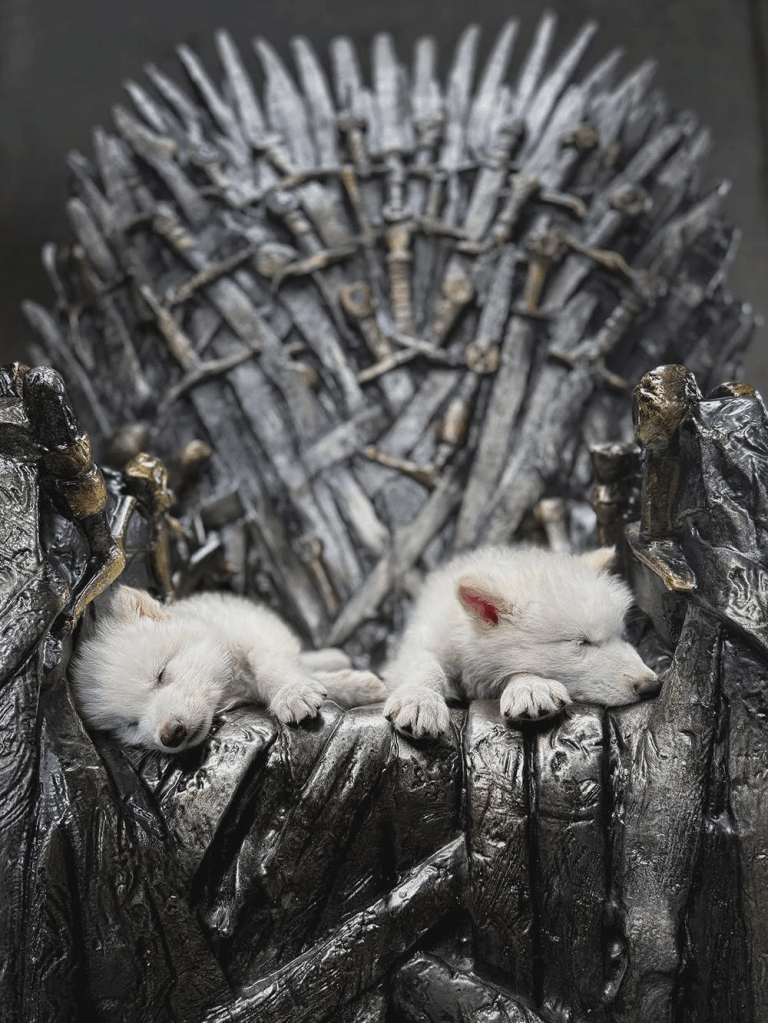
A promotional image from Colossal Biosciences depicting their genetically modified grey wolf puppies on the Iron Throne prop from A Game of Thrones, thanks to their sponsor George R. R. Martin and in reference to the “direwolves” within that fantasy franchise, which they bear more superficial similarities to than they likely do to the prehistoric dire wolf.
Aside from Colossal’s implication that the dire wolf is much more closely related to the grey wolf than it actually is, they also have made curious claims about its color. Colossal suggests they have evidence that dire wolves were white in color but they have not published any study demonstrating this, though it would rather obviously be a strange coloration for a large predator that lived in temperate and subtropical climates, not the Arctic. But if you’ve heard of “direwolves” before, it might be because of their adoption in fantasy, notably in both Dungeons & Dragons and A Song of Ice and Fire, the latter of which is the book series that begins with A Game of Thrones and is written (at the speed of a racing continent) by George R. R. Martin. Martin’s direwolves are essentially giant versions of grey wolves and in the TV adaptations, many of these are white and they are associated with the cold north of the fantasy continent of Westeros. George R. R. Martin is listed as a cultural advisor for Colossal and is one of their large donors. Even before the existence of the pups was announced to the public, Martin got to meet them and on his personal blog, he describes it as a very moving experience. Scientists in their responses have not commented on this all very much, but people in the popular audience have noticed it. In a world where a connection to a popular fantasy franchise might garner the project a lot of interest, it certainly seems that the design of the wolves may have been impacted by efforts to make that association. Also, to get a little further in my own speculation, I do not think Martin got his idea for direwolves from paleontology. A Game of Thrones was first published in 1996, but “dire wolves” were already used in fantasy at that point. Martin is a fan of the TTRPG Dungeons & Dragons, which features dire wolves as one type of monster. Looking at the wiki to see which edition first featured them, I was able to find that they appeared in Swords of the Iron Legion, an official adventure released for the first edition way back in 1988. So, while the current media buzz makes it sound like Martin was inspired by paleontology, personally I find it more likely he was inspired by this earlier fantasy giant (which may have been itself inspired by the paleontology) and that later as it became narratively convenient to tie his fantasy creatures with Colossal’s projects, he became inspired by fossils.
The scientific achievements at Colossal are undoubtedly very cool and interesting to talk about, even if they are not exactly what is advertised or implied. That said, it is clear that they don’t represent the dire wolf coming back, nor is the proxy they are supposedly creating really usable in the way they claim it is according to major conservation organizations. And that misleading tone can be, frankly, dangerous. Days after Colossal made its well-publicized announcement, US president Donald Trump’s new secretary of interior Doug Burgum posted the following on X on April 7:
The mission of the U.S. Fish and Wildlife Service is to work with others to “conserve, protect, and enhance fish, wildlife, plants, and their habitats for the continuing benefit of the American people.”
The Department of the Interior is excited about the potential of “de-extinction” technology and how it may serve broader purposes beyond the recovery of lost species, including strengthening biodiversity protection efforts and helping endangered or at-risk species.
The Endangered Species List has become like the Hotel California: once a species enters, they never leave. In fact, 97 percent of species that are added to the endangered list remain there. This is because the status quo is focused on regulation more than innovation.
It’s time to fundamentally change how we think about species conservation. Going forward, we must celebrate removals from the endangered list – not additions. The only thing we’d like to see go extinct is the need for an endangered species list to exist. We need to continue improving recovery efforts to make that a reality, and the marvel of “de-extinction” technology can help forge a future where populations are never at risk.
Since the dawn of our nation, it has been innovation – not regulation – that has spawned American greatness. The revival of the Dire Wolf heralds the advent of a thrilling new era of scientific wonder, showcasing how the concept of “de-extinction” can serve as a bedrock for modern species conservation.
The Dire Wolf revival carries profound cultural significance as it embodies strength and courage that is deeply encoded within the DNA of American identity and tribal heritage.
Breakthroughs of this nature will inspire leading minds and future generations of innovators to chase the impossible, capture it, and unleash its potential!
The Department of the Interior looks forward to a vibrant future full of innovation that advances core missions such as wildlife conservation.
In other words, de-extinction is just a convenient excuse to remove environmental protections for corporate interests. Who cares if animals are endangered if they can be brought back? The administration has spent its early months stripping regulations on environmental protections such as opening up formerly protected federal lands for the oil industry, especially in the Alaskan Arctic National Wildlife Refuge, which alone lost around 6,191 square kilometers of protected land. Corporate interests take up these concessions and it aligns with the general tendency of the Trump administration to favor ultra-wealthy corporations over local well-being. When habitat loss is the major reason species are going extinct today and the endangered species list is the predominant means of classifying their protection needs, giving protected land away and removing those protection systems is a death sentence for many species. Unfortunately, the false narrative that Colossal promotes about their projects, that they provide a real solution to extinction, fuels an economy of excuses. And while I have no doubt that the scientists and specialists there have a deep and excited interest in their projects, for-profit companies still have to make profit. As de-extinction ends up in this sector, it becomes commodified and narrativized in ways that attract investors and play fast and loose with discussing any downsides or limitations.
Early on while I was working on this article in the same month that Colossal unveiled its wolves, I saw a story promoted by several major news outlets (I think I first saw it by NBC) that claimed that bags made from Tyrannosaurus rex leather were now on the market. And if this sounds insane to you, I thought the same. It turns out that Lab-Grown Leather, a company that… well… lab-grows leather, is now marketing what they call Elemental X, claimed to be the world’s first T. rex leather, which can be used for handbags and other luxury items for a high price. This company cultures cells in a lab to make leather without killing animals and has stated that its collagen-based T. rex leather is, using the wording on the website, based on Tyrannosaurus rex collagen as a “genomic reference.” This is patently nonsensical as a genomic reference for T. rex doesn’t exist as no DNA has ever been found. And, as many experts have pointed out, the fossilized collagen we have from T. rex is from fossilized bones, not skin, which is what leather is made of. In no way does this represent T. rex leather. (And frankly neither does the AI-generated promotional imagery on their own website for it, which the news has used as thumbnails.) Sadly we live in a world where corporations can just make these claims and news organizations will report on it without knowing any better.
We live in the most technologically advanced society that has ever existed on this planet and yet a significant portion of that society’s creative and technical capacity is being used to grift and mislead to make money off the curious and excited. The reality is that in 2025, after all the interesting developments I’ve told you about through this article, the major application of de-extinction, the cultural phenomenon, is as a marketing gimmick. Meanwhile, we’re killing off several species on this planet every single hour while the people responsible for much of the industrial processes doing that like to shrug off that responsibility on the fact that de-extinction technically is possible without looking at the finer details of how much of a non-answer that really is amidst the scale of the problem.
A Conclusion
Usually I write about the past at some distance and when I do that I can apply an analytical lens from history or archaeology or paleontology to it and come away with some new way of looking at it or at least one that’s new for me in relation to my previous experiences before writing. A lot of this relies on sifting through how other people have narrated those stories and seeing what I like and dislike, what I find sensible and well-argued vs. what I find irrational or disagreeable but often still usable. History, even history of science, is not just a field but a narrative practice, a weaving together of different data points and notions into an explanatory framework. History is still unfolding today but commenting on the present and on things that are ongoing is a bit of a different type of research and commentary.
This particular article was, as you can probably guess at the end of reading it (congratulations if you made it all the way through; this is, by a considerable margin, the longest thing I have ever written outside of a university context), inspired by the reactions I saw to Colossal’s dire wolf announcement. I have always been interested in de-extinction as a life-long fan of Jurassic Park and also video games which feature it in a park-building setting like Zoo Tycoon 2: Extinct Animals and more recently Prehistoric Kingdom. I remember when I was younger being aware of the Chickenosaurus project, talk of cloning the mammoths, and even the story of the Pyrenean ibex, the latter of which to me remains the best case study that de-extinction of animals is possible. That is why it was baffling to me when Colossal marketed their dire wolf project as the first successful de-extinction and journalism presented it as if the company was unique in carrying out these ambitions. In researching these cases, I found they were almost always commented on separately and not as part of a larger history of the topic. The easiest answer to this seems to be that because the different methods of de-extinction are so technically different (selective back-breeding, cloning, environmental reconstruction, germinating seeds, and CRISPR-editing an organism to look like an ancient one, to name just some of those I’ve featured in this article) that plenty of these developments can be thought-of as separate. But a second, and perhaps pessimistic on my part, reason I think this occurs is that there is so much excitement in being first and so much blurred space on what really “counts” on this topic that some of those involved find it fitting to present themselves as the first to pull off whatever defining milestone they choose, rather than helping the public see that science is a community activity with more incremental steps than dramatic breakthroughs. Maybe this is unfair and if you are involved in any of the projects mentioned in this article, I would love to hear from you (actually, I’ve already interacted with the folks from Colossal before online; I’m the guy who moderates r/PrehistoricMemes also, which I know you guys frequent).
At the end of this research and writing process, I found a few larger takeaways that I hope you will consider, dear reader:
- “De-extinction” is not a scientific field. It is a human cultural phenomenon that utilizes different scientific developments in multiple fields, mostly within biology, to try to recreate a notion of the past. What unites de-extinction projects is this human tendency to yearn for aspects of the past that we feel nostalgic for, not the specific methods of practice, which are often entirely different from one another. The past can be important for people in many different ways from things as harmful as imagined nationalistic primordial fantasies to as healthy as a desire for a more stable ecosystem with former damage getting repaired. That said, despite it not being one scientific field, de-extinction projects are deeply intertwined with science and the developments attached to it are often the same developments feeding progress in other fields from understanding conservation and ecological engineering to genetic technologies that improve our food supply and our medicine. There are immense positives to the basic science that comes out of these projects and can be applied elsewhere.
- De-extinction does not provide a meaningful solution to the present biodiversity crisis. As dozens of species disappear from our world daily and scientists spend years on bringing back just one, no amount of technical focus on any of these methods in either the public or private sector will offset the extinction rate significantly enough to prevent or stop the current mass extinction. Sure, it is possible to bring back extinct organisms and it’s wonderful that, for instance, several plants that have disappeared have sprouted once more thanks to care and seed banks. But as of now you can count the number of cases there on your fingers.
- The closest thing to a simple answer to the biodiversity crisis and the prerequisite for de-extinction to actually lead to results are one and the same: organisms need habitats. If we brought back a Tyrannosaurus rex today, it simply could not survive outside of captivity because its ecosystem is gone. As humanity scours the natural world for space and resources, more organisms’ existences will become impossible and they will die off. Cloning them will just be the creation of zoo animals unless we can reverse that process. Of all the projects I researched, Pleistocene Park actually captured my imagination for this reason the most. Let’s talk about the environments species live in and how we can help them thrive. After all, none of them evolves or goes extinct in a vacuum.
- De-extinction projects often have more to teach us about ourselves than about the ancient animals we want to replicate. Building a model dire wolf from a grey wolf will never show us how real dire wolves lived and we won’t know if the behavior of those animals is “accurate.” The fossils will continue to be our best way to learn about those prehistoric creatures. The creatures we create will reflect how we think of those creatures. Heck cattle were bred on vibes and often to fit the ancient Aryan fantasies the Nazis had. Jurassic Park looms large over any discussion of de-extinction. “Dire wolf” breeding appeals to the popularity of A Game of Thrones. No matter how much science is in the discussion, fiction can be as powerful as science in determining what we do and create in the artistic endeavor of building life.
- De-extinction can lead to wonderful things but we need to be critical of its execution. The attachment of the first major de-extinction project to the genocidal Generalplan Ost was not an accident: like the Nazis’ horrifying vision of a utopia, de-extinction projects often imagine a remaking of the world and a transformative power beyond what their science can do. This narrative power can be attached to many messages to make them exciting and powerful. We need to be constantly asking ourselves why people want to do these projects and to what ends, especially in the hands of governments and corporations.
- And lastly, while it has its limits, it is possible.
I hope you enjoyed reading and may you not get any viruses from the ice.
Further Academic Reading
- Ajmone-Marsan, Paolo; Garcia, José Fernando; and Lenstra, Johannes A. “On the Origin of Cattle: How Aurochs Became Cattle and Colonized the World.” Evolutionary Anthropology: Issues, News, and Reviews, 19(4), 2010: 148-157. researchgate.net/profile/Johannes-Lenstra/publication/222110938_On_the_origin_of_cattle_how_aurochs_became_domestic_and_colonized_the_world/links/0d1c84f7ded3bee21c000000/On-the-origin-of-cattle-how-aurochs-became-domestic-and-colonized-the-world.pdf
- Alempic, Jean-Marie et al. “An Update on Eukaryotic Viruses Revived from Ancient Permafrost.” Viruses, 15(2), 2023: 564. An Update on Eukaryotic Viruses Revived from Ancient Permafrost
- Asdal, Åsmund and Guarino, Luigi. “The Svalbard Global Seed Vault: 10 Years—1 Million Samples.” Biopreservation and Biobanking, 16(5), 2018: 391-392. liebertpub.com/doi/pdf/10.1089/bio.2018.0025
- Balsam, Joey. “What Happened to Montreal’s Legendary Melon?” Atlas Obscura, 2022. What Happened to Montreal’s Legendary Melon? – Gastro Obscura
- Bernstein, Anya. “Pleistocene Park: Engineering Wilderness in a More-than-Human World.” Critical Inquiry, 50(3), 2024: 452-471. https://www.academia.edu/download/118191725/Bernstein_Critical_Inquiry_2024.pdf
- Bittel, Jason. “Can this ‘woolly mouse’ help bring back extinct mammoths?” Science News Explores, 2025. Can this ‘woolly mouse’ help bring back extinct mammoths?
- Black, Riley. “Book Review: How to Build a Dinosaur.” Smithsonian Magazine, 2009. Book Review: How to Build a Dinosaur | Science | Smithsonian Magazine
- Boissoneault, Lorraine. “When the Nazis Tried to Bring Animals Back From Extinction.” Smithsonian magazine, published online, 2017. When the Nazis Tried to Bring Animals Back From Extinction
- Carrington, Damian. “Meatball from long-extinct mammoth created by food firm.” The Guardian, 2023. Meatball from long-extinct mammoth created by food firm | Meat industry | The Guardian
- Colossal Biosciences: Solving the Colossal Problem of Extinction | Colossal
- Crichton, Michael. Jurassic Park, 1990.
- Danylova, T.V. and Komisarenko, S.V. “Standing on the Shoulders of Giants: James Watson, Francis Crick, Maurice Wilkins, Rosalind Franklin and the Birth of Molecular Biology.” Ukrainian Biochemical Journal, 92(4), 2020: 154-165. https://www.academia.edu/download/65067136/Danylova_T.V._Komisarenko_S.V._Standing_on_the_Shoulders_of_Giants.pdf
- Doudna, Jennifer A. and Charpentier, Emanuelle. “The new frontier of genome engineering with CRISPR-Cas9.” Science, 346, 2014: 1258096. osu-wams-blogs-uploads.s3.amazonaws.com/blogs.dir/2501/files/2016/11/The-new-frontier-of-genome-engineering-with-CRISPR-Cas9.pdf
- Driessen, Clemens and Lorimer, Jamie. “Back-breeding the aurochs: the Heck brothers, National Socialism and imagined geographies for nonhuman Lebensraum.” Hitler’s geographies: The spatialities of the Third Reich, 2016: 138-157. https://www.academia.edu/download/44359814/Driessen___Lorimer_ch6_-_in_giaccaria_minca_2016.pdf
- Fitzsimons, F.W. The Natural History of South Africa: Mammals in Four Volumes: Vol. III. 1920. quaggaproject.org/_downloads/Natural history of SA 1920.pdf
- Goor, Asaph. “The History of the Date through the Ages in the Holy Land.” Economic Botany, 21(4), 1967: 320-340. The History of the Date through the Ages in the Holy Land on JSTOR
- Heather, James M. and Chain, Benjamin. “The sequence of sequencers: The history of sequencing DNA.” Genomics, 107(1), 2016: 1-8. The sequence of sequencers: The history of sequencing DNA – ScienceDirect
- Heiderscheidt, Drew. “The Impact of World War one on the Forests and Soils of Europe.” Ursidae: The Undergraduate Research Journal of the University of Northern Colorado, 7(3), 2018: 1-16. https://digscholarship.unco.edu/cgi/viewcontent.cgi?article=1175&context=urj
- Hovden, Kacey. “Bringing Dinosaurs Back: The Moral & Legal Complications.” Animal Law Review, 29(2), 2023: 121-140. lawcommons.lclark.edu/cgi/viewcontent.cgi?article=1105&context=alr
- IUCN Species Survival Commission Canid Specialist Group Taxonomic Review Task Force. “Conservation perspectives on gene editing in wild canids: Commentary on the announced re-creation of a genetic proxy of an extinct dire wolf by Colossal.” 2025. canids.org/resources/CSG gene editing in wild canids.pdf
- Jacob, Manon. “Trump cabinet official misleads on ‘de-extinction’ after wolf cub announcement.” AFP Fact Check, 2025. Trump cabinet official misleads on ‘de-extinction’ after wolf cub announcement | Fact Check
- Kefena, E. et al. “Discordances between morphological systematics and molecular taxonomy in the stem line of equids: A review of the case of taxonomy of genus Equus.” Livestock Science, 143, 2012: 105-115. https://www.academia.edu/download/43943188/Discordances_between_morphological_syste20160321-13559-1mz5mmd.pdf
- Kluger, Jeffrey. “The Return of the Dire Wolf.” TIME, 2025. The Return of the Dire Wolf | TIME
- Lab-Grown Leather. “Elemental X: The World’s First T-Rex Leather.” Elemental X – Lab Grown Leather
- Leonard, Jennifer A. et al. “A rapid loss of stripes: the evolutionary history of the extinct quagga.” Biology Letters, 1, 2005: 291-295. pmc.ncbi.nlm.nih.gov/articles/PMC1617154/pdf/rsbl20050323.pdf
- Librado, Pablo et al. “Tracking the origins of Yakutian horses and the genetic basis for their fast adaptation to subarctic environments.” Proceedings of the National Academy of Sciences, 112(50), 2015: E6889-E6897. https://www.pnas.org/doi/pdf/10.1073/pnas.1513696112
- Linkies, Ada et al. “The evolution of seeds.” New Phytologist, 186(4), 2010: 817-831. nph.onlinelibrary.wiley.com/doi/pdfdirect/10.1111/j.1469-8137.2010.03249.x
- Loi, Pasqualino; Saragusty, Joseph; and Ptak, Grazyna. “Cloning the Mammoth: A Complicated Task or Just a Dream?” Reproductive Sciences in Animal Conservation: Progress and Prospects: 489-502. researchgate.net/profile/Pierre-Comizzoli/publication/264501714_Recent_Advances_and_Prospects_in_Germplasm_Preservation_of_Rare_and_Endangered_Species/links/6026be46a6fdcc37a8218b10/Recent-Advances-and-Prospects-in-Germplasm-Preservation-of-Rare-and-Endangered-Species.pdf#page=495
- Lorimer, Jamie and Driessen, Clemens. “From ‘Nazi Cows’ to Cosmopolitan ‘Ecological Engineers’: Specifying Rewilding Through a History of Heck Cattle.” Annals of the American Association of Geographers, 106(3), 2016: 631-652. https://www.academia.edu/download/50013570/lorimer_driessen_2016_-_specifying_rewilding_heck_cattle_-_aaag.pdf
- Mammoth meatball: The Mammoth Meatball
- Martin, George R. R. “D-Day Comes Early.” 2025. D-Day Comes Early | Not a Blog
- Morono, Yuki et al. “Aerobic microbial life persists in oxic marine sediment marine sediment as old as 101.5 million years.” Nature Communications, 11(3626), 2020. Aerobic microbial life persists in oxic marine sediment as old as 101.5 million years | Nature Communications
- Munteanu, Lavinia. “Spatial Planning and Destructive Practices in National Socialist Germany: The ‘Generalplan Ost’.” SPACE International Journal of Conference Proceedings, 4(1), 2024: 16-24. https://journal.spacestudies.co.uk/index.php/space-ijocp/article/download/45/89
- Pacesca, Martin; Pelea, Oana; and Jinek, Martin. “Past, present, and future of CRISPR genome editing technologies.” Cell, 187(5), 2024: 1076-1100. Past, present, and future of CRISPR genome editing technologies – ScienceDirect
- Perri, Angela R. et al. “Dire wolves were the last of an ancient New World canid lineage.” Nature, 591(7848), 2021: 87-91. https://orbi.uliege.be/bitstream/2268/255832/1/NatureDireWolves_authorversion.pdf
- Pester, Patrick. “T. rex researchers eviscerate ‘misleading’ dinosaur leather announcement.” LiveScience, 2025. T. rex researchers eviscerate ‘misleading’ dinosaur leather announcement | Live Science
- Piña-Aguilar, Raul E. et al. “Revival of Extinct Species Using Nuclear Transfer: Hope for the Mammoth, True for the Pyrenean Ibex, But Is It Time for ‘Conservation Cloning’?” Cloning and Stem Cells, 11(3), 2009: 341-346. https://www.academia.edu/download/89903544/clo.2009.002620220819-1-udmnh7.pdf
- Pleistocene Park: Pleistocene Park
- Quagga Project: https://www.quaggaproject.org/
- “The Real Jurassic Park.” NOVA, 1993. NOVA – The Real Jurassic Park (1993)
- Revich, Boris A. and Podolnaya, Marina A. “Thawing of permafrost may disturb historic cattle burial grounds in East Siberia.” Global Health Action, 21(4), 2011. Thawing of permafrost may disturb historic cattle burial grounds in East Siberia – PMC
- Sallon, Sarah et al. “Origins and insights into the historic Judean date palm based on genetic analysis of germinated ancient seeds and morphometric studies.” Science Advances, 6(6), 2020. Origins and insights into the historic Judean date palm based on genetic analysis of germinated ancient seeds and morphometric studies | Science Advances
- Sallon, Sarah et al. “Characterization and analysis of a Commiphora species germinated from an ancient seed suggests a possible connection to a species mentioned in the Bible.” Nature Communications Biology, 7(1109), 2024. https://www.nature.com/articles/s42003-024-06721-5.pdf
- Spielberg, Steven, director. Jurassic Park. Universal Pictures, 1993.
- Svalbard Global Seed Vault: Svalbard Global Seed Vault
- Wills, Matthew. “Cows Gone Wild: The Cattle of Heck.” JSTOR Daily, 2022. Cows Gone Wild: The Cattle of Heck – JSTOR Daily
- Woodward, Holly N. et al. “Maiasaura, a model organism for extinct vertebrate population biology: a large sample statistical assessment of growth dynamics and survivorship.” Paleobiology, 41(4), 2015: 503-527. cambridge.org/core/services/aop-cambridge-core/content/view/288407BA0A91914480A0531529F050EF/S0094837315000196a.pdf/div-class-title-span-class-italic-maiasaura-span-a-model-organism-for-extinct-vertebrate-population-biology-a-large-sample-statistical-assessment-of-growth-dynamics-and-survivorship-div.pdf
- Zheng, Xiaoting et al. “Nuclear preservation in the cartilage of the Jehol dinosaur Caudipteryx.” Nature Communications Biology, 4(1125), 2021. Nuclear preservation in the cartilage of the Jehol dinosaur Caudipteryx | Communications Biology
- Zimov, Sergey A. “Pleistocene Park: Return of the Mammoth’s Ecosystem.” Science, 308(5723), 2005: 796-789. science.org/doi/pdf/10.1126/science.1113442
Living in the Longue Durée is part of the History Nerds Network, a group of friends who together make history content online. Check out our Discord server here if you’d like to chat with us: https://discord.gg/dzdrzUpKeG You can also follow for post updates on the Facebook page ( https://www.facebook.com/profile.php?id=61559902349797 ) or on Instagram at @livinginthelongueduree . You can also follow me on Bluesky at @iacobuscaesar.bsky.social where I am happy to participate in history and science discussions with you.
Consider supporting my time and money investment into research on Patreon if you want to allow articles like this to maintain their quality and regularity: Living in the Longue Durée | A thoughtful and eclectic history blog. | Patreon


 Living in the Longue Durée
Leave a reply to Rue Ryuzaki Cancel reply